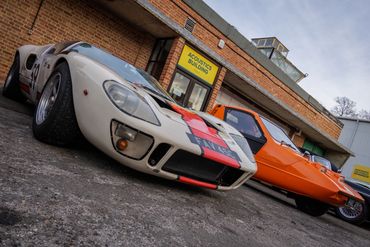
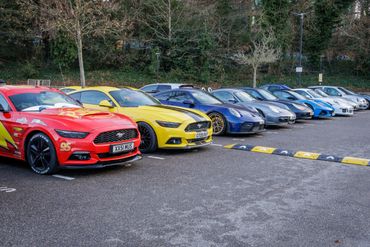
Haddenham Classics' trips out 2026
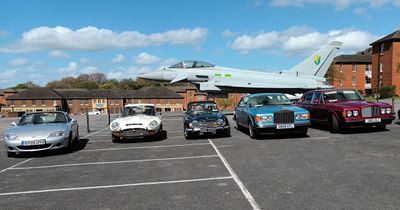
We like to go out as a group in our classic motors from time to time, to visit things of interest to car enthusiasts.
In 2025 we visited some great places. See our 2025 trips page for write ups.
2026 brings more opportunities for visits. So far we have had trips to Brooklands, Kelvedon Hatch Secret Nuclear Bunker, Coventry Transport Museum, The Trenchard Museum, Aston Martin Heritage Trust, Chafor Wine Estate and Dunstable Downs - see below, and we are planning a number of other outings. See our calendar.
HC picnic at Dunstable Downs, August 2026

words by Michelle Jones
photos by Chris Andrews, Michelle Jones and Nick Filleul
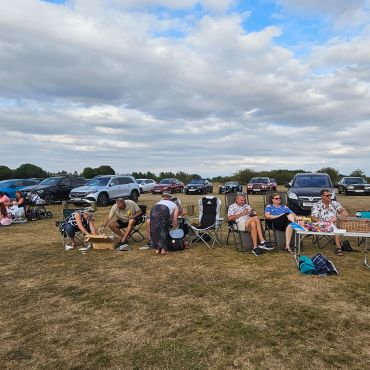
After the incredibly hot weather of the past few days, it was a relief to have a slightly cooler day for our first Haddenham Classics picnic.
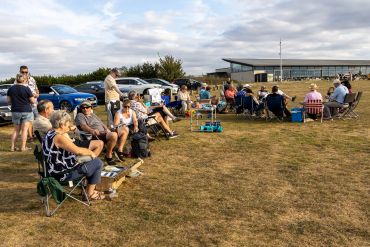
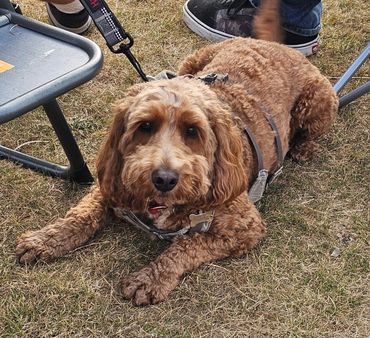
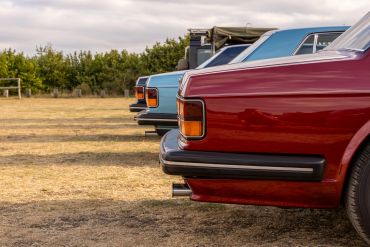
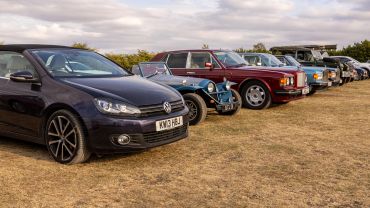
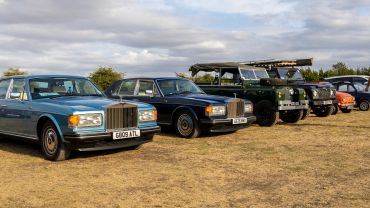
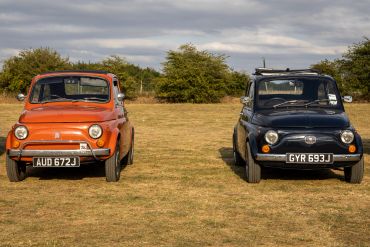
Just over 20 of us drove in our classics, through the countryside, out to Dunstable Downs in the early evening. It was a great opportunity to socialise and have a bite to eat, whilst enjoying the amazing view over the fields and pleasant breeze.
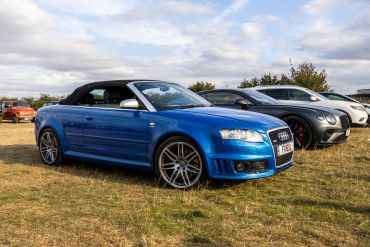
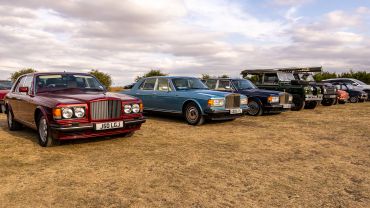
There were lots of other members of the public up at the Downs and several of them came to admire our collection of classic cars. It was also great weather for kite flying which was fun to watch, and a couple of gliders and paragliders also passed by.
After a couple of hours, it was time for some to go, but others stayed on to catch the sun going down and enjoy more chat.
Thanks to all who came and we look forward to seeing you at another Haddenham Classics event soon.
.jpeg/:/rs=w:370,cg:true,m)
.jpeg/:/rs=w:370,cg:true,m)

.jpeg/:/rs=w:370,cg:true,m)
HC visit to Chafor Wine Estate, July 2026
.jpeg/:/cr=t:0%25,l:0%25,w:100%25,h:100%25/rs=w:600,cg:true)
words by Michelle Jones
photos by Dave Robinson and Michelle Jones
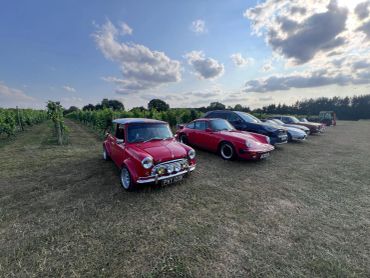
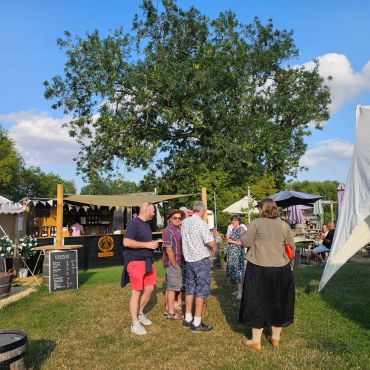
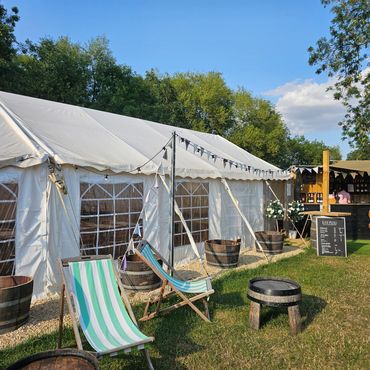
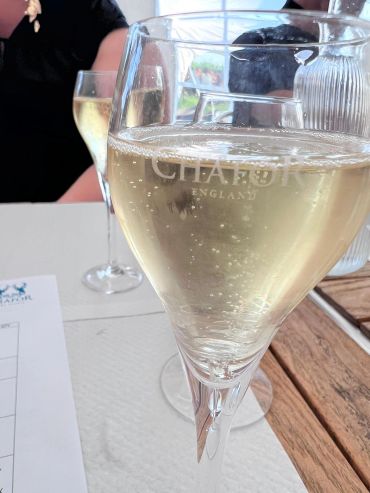
On a lovely summer’s evening, 13 of us from Haddenham Classics drove out to Chafor Wine Estate, near Gawcott, Bucks. We enjoyed a tour of the estate, with a talk on English wine making, finishing up with a tasting session of some Chafor wines.
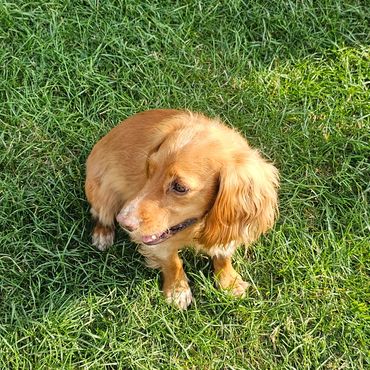
Chafor is a family-run, award-winning vineyard, set in a peaceful location in the Buckinghamshire countryside. The estate is run by Tim Chafor and his wife, Sarah, and their team, including Rosie the dog, who was very welcoming!
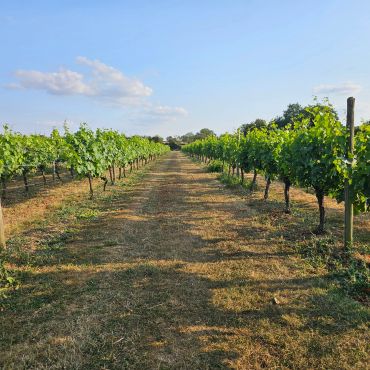
The first vines were planted by Tim in 2009. They grow Chardonnay, Pinot Noir and Pinot Meunier grapes, alongside other varieties such as Madeleine Angevine, and Bacchus – which is becoming very popular in English wine making.
Tim took us on the tour, which included lots of information about English wines, as we stood amongst the vines in the evening sunshine. We then moved inside to the winery, where the wine making process was explained. Next we sat down for a tasting of three of their wines from 2025, a rose, a white and a sparkling. This was followed by sharing boards of charcuterie / bread and cheese / biscuits, and a chance to sit and chat.
Several purchases were made to take home, and some people took advantage of the discount on 6 or more bottles!
As the sun started to go down, we left in our classics for the drive home. A great venue, perhaps we can use it for another Haddenham Classics event. Chafor Wine Estate also puts on their own events throughout the year and offers venue hire and even camping on their site.
Thanks to the Chafor team for an enjoyable evening.
.jpeg/:/rs=w:370,cg:true,m)
.jpeg/:/cr=t:0%25,l:0%25,w:100%25,h:100%25/rs=w:370,cg:true)
.jpeg/:/rs=w:370,cg:true,m)
.jpeg/:/rs=w:370,cg:true,m)
.jpeg/:/rs=w:370,cg:true,m)
.jpeg/:/rs=w:370,cg:true,m)
.jpeg/:/rs=w:370,cg:true,m)
.jpeg/:/rs=w:370,cg:true,m)
.jpeg/:/rs=w:370,cg:true,m)


Haddenham Classics' trip to The Trenchard Museum, April 2026

by Barry Hack
On 11 April, a group of 11 of us met up at RAF Halton for a visit to the Trenchard Museum, which proved to be very interesting. I have to confess I had never heard of this place, but as it is part of the RAF site, I thought I would go along and take a look. I’m so glad I did.
The Trenchard Museum covers the history of RAF Halton and is named after Viscount Trenchard, who is regarded as the founder of the RAF and also the Apprentice Scheme which has been synonymous with Halton.
RAF Halton is still an operational base, hence strict security is in place. The visit started off with being met at the Guardroom car park, and once all assembled we were issued with our passes, and followed in convoy through the base to the museum. It’s amazing how big RAF Halton is, an enormous site with numerous accommodation blocks to house the many trainees that have passed through here.
Once inside the museum, we were given a talk overviewing the history of the site and how it has evolved. The site was originally owned by the Rothchilds, who agreed in 1913 that it could be ‘borrowed’ for the training of new recruits at the outbreak of WW1. However once the war was over, the Rothchilds decided they did not really want it back, partly due to the work and number of buildings erected to support the training of new recruits, etc.
The museum houses a Gnat Aircraft, used primarily for pilot training, and a collection of many items including aero engines, weapons, tools, uniforms, model aircraft, and numerous pieces of memorabilia, including a small piece of the original wing fabric from the Kitty Hawk ‘Wright Flyer’.
The museum also gives access to the James McCudden Flight Heritage Centre. Here you are greeted with a display of aircraft engines, several pilot training aircraft tubs, and an amazing glider with a video showing how the pilot sits at the front in an open cockpit – I think he must have been crazy, but that’s just my feet on the ground view!
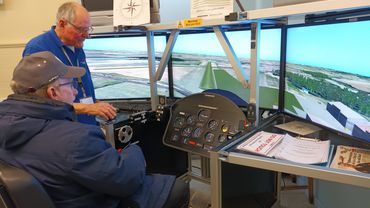
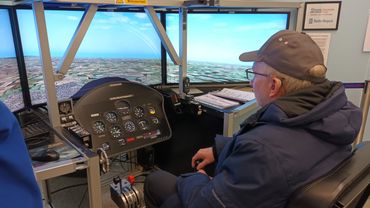
At the far end of this hall there are two simulators to round off a superb visit. One is based on a Chipmunk, which after a demonstration, we were allowed to have a go in. My flight was OK but came in for a bouncy landing, however if anyone wants flying lessons, just see Lee, he showed how it should be done!
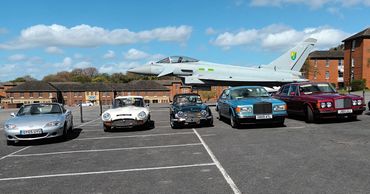
We spent about two and a half hours on site, at the end of our visit we were allowed to line our cars up in front of the Tornado in the car park for our photo shoot. A good time was had by all.
More details of the museum can be found at https://www.trenchardmuseum.org/museum
After the museum, some of the group went to The Red Lion in Wendover for some food and an opportunity to socialise and talk about the visit.
Thanks to Tom Walsh for organising the day.
HC trip to Coventry Transport Museum, March 2026

by Lee Jones
The third outing for Haddenham Classics this year saw our small but enthusiastic convoy head north, for a morning run to one of Britain’s great motoring shrines – Coventry Transport Museum. With six cars and eleven members making the journey, it proved to be another memorable day blending driving, history and good company.
Our meeting point was Bradmoor Farm, where after a short natter over the cars, we fired up the engines and set out with Barry and Neil Hack leading the pack up the M40 in Neil's newly repaired Healey. The line-up this time was an appealing mix of classic and modern machinery, proving once again that enthusiasm for cars does not depend on their age. The run north in convoy was enjoyable and we received some admiring glances along the route. Particularly when we were in the layby fixing Neil's bonnet!
By late morning, we rolled into Millennium Place in Coventry, and took up residence right outside the museum. Almost immediately the cars began to attract attention. Passers-by stopped to admire the line-up, while others simply took the opportunity to grab photographs with the cars. Our Haddenham Classics A-board stood proudly beside them, letting curious onlookers know exactly who we were and what the club is about.
Breakfast was first on the agenda, so we headed into the museum cafe for a well-earned refuel before the real legwork began.
Our knowledgeable tour guide soon appeared and led us into the remarkable story of Coventry itself. It is easy to think of the city simply as a centre of British car manufacturing, but its roots stretch back much further. The name Coventry is believed to derive from a Saxon settlement around a convent – often interpreted as ‘Cofa’s tree’ or ‘Coventre’ – which gradually grew into a prosperous medieval town. By the nineteenth century it had become one of the engines of the Industrial Revolution.
Before cars arrived, Coventry was famous for bicycles and watchmaking – and we all know Haddenham members love their watches! Those early engineering skills proved the perfect foundation for the motor industry, and by the early twentieth century, the city had become one of the most important automotive centres in the world. Brands such as Daimler, Triumph, Riley, Standard, Hillman, and later, Jaguar all called Coventry home. Walking through the museum, you quickly realise just how many names – some now long forgotten – once built cars within a few miles of where we were standing.
The museum itself reflects that diversity. The collection moves through time from early bicycles and motorcycles to grand tourers, record breaking land speed machines, buses, and everyday family cars that once filled Britain’s roads. Some marques have vanished entirely, remembered only through the vehicles preserved here.

But Coventry’s story is not only about industry and innovation. It is also about resilience. In November 1940, the city endured one of the most devastating air raids of the Second World War. During what became known as the Coventry Blitz, German bombers dropped thousands of incendiaries and high explosive bombs across the city in a single night. The medieval cathedral of St Michael was almost completely destroyed, its roof collapsing in flames while much of the city centre burned around it.
Rather than clear the site entirely, the ruined cathedral walls were left standing as a memorial. In the decades after the war, Coventry rebuilt itself and constructed a striking new cathedral alongside the old ruin. The two now stand side by side – one a reminder of destruction, the other a symbol of reconciliation and renewal.
After our tour of the museum, lunch followed, along with plenty of enthusiastic conversation about favourite exhibits and long-forgotten car brands. As with any good motoring day out, the cars themselves remained part of the story, with people continuing to wander past outside and take a closer look at the line-up.
With the museum explored, we took a short stroll across Millennium Place to visit Coventry Cathedral. It is impossible not to be struck by the contrast between the roofless stone shell of the old cathedral and the towering modern structure built beside it. The modern building is, perhaps, something of an acquired taste architecturally, but inside it reveals some extraordinary stained glass windows that flood the space with colour.
Beneath the ruin lies the Blitz Museum, which offers a powerful glimpse into that terrible night in 1940 and the city’s determination to rebuild afterwards. It is a moving reminder that Coventry’s history is about far more than engines and factories.
Sadly, as all good days do, this one eventually drew to a close. With the afternoon fading, our group gathered once more and reflected on what had been another excellent Haddenham Classics outing. Engines fired back into life and the convoy began its journey home, though not everyone took the direct route. Several members opted for a more scenic drive back through the countryside – a fitting end to a day that had begun with a proper run out.
Our thanks go to Coventry Transport Museum for hosting us. It is a fascinating place and well worth a visit for anyone passing that way – whether you are a dedicated petrolhead or simply curious about the city that helped shape Britain’s motoring story.
Roll on the next Haddenham Classics adventure!
HC trip to Kelvedon Hatch Secret Nuclear Bunker, Feb 2026

words and video by Lee Jones
photos by Alan Esam
On a typically British Saturday morning – characterised by relentless, driving rain – a group of intrepid members of Haddenham Classics Car Club convened at The Seven Stars pub in Dinton. The weather forecast had clearly been consulted by all but myself, leading to a convoy composed entirely of sensible daily drivers, except my solitary classic, standing out like a brave, if slightly foolish, testament to optimism amidst the puddles. Our destination? One of Essex’s most extraordinary and sobering relics of the Cold War: Kelvedon Hatch Secret Nuclear Bunker.
Upon arrival at the unassuming farmhouse entrance, we were joined by more Haddenham Classics folks. The scene was deliberately mundane, a perfect camouflage for what lay beneath. Stepping through the farmhouse door, we left the 21st century behind and began our descent down a long, dimly lit concrete ramp, the air growing cooler with each step into the depths.
Heavy blast doors sealed us into a subterranean world, a chilling time capsule from a threat that once held the nation in its grip. For a moment, we contemplated the bizarre reality: had global tensions ever tipped into World War III, this bland Essex countryside would have become the epicentre of regional government.
Secrets beneath the soil: facts from the bunker
Thanks to the excellent self-guided tour and the bunker’s own resources, we uncovered some fascinating facts about our eerie surroundings:
· Deep and secretive: The bunker is buried 125 feet beneath the chalk, protected by a 10-foot-thick reinforced concrete roof, designed to withstand a near-miss from a nuclear blast.
· A threefold life: It began in the early 1950s as an RAF’s ROTOR station. It then became a civil defence centre. Then in the 1960s, it was transformed into a regional government headquarters, intended to house up to 600 military and civilian personnel – from the Prime Minister down to essential workers – for up to three months, to run the country in the event of a nuclear war. Post-Cold War, it was decommissioned and remarkably bought back from the government by the original landowning family.
· A town underneath: It was a self-contained citadel. We saw the vast, eerily quiet dormitories, the cavernous canteen and communications rooms, and even the BBC studio from where ‘essential’ broadcasts would have been made to the decimated population above. The highlight for many was the map room, its walls still lined with the operational charts of a past peril.
Emerging back up the ramp into the wet Essex afternoon was a jarring but welcome experience. With our minds full of atomic-age history, our party departed the bunker and relocated to a nearby pub for a hearty lunch, a well-earned drink, and a lively natter. The conversation was a perfect blend of club camaraderie – catching up on each other's news, discussing cars in general, and looking ahead to our upcoming events.
Thanks to Phil Day for organising this thought-provoking outing and for scouting out the perfect post-tour lunch stop – The Shepherd pub. It was a unique and memorable day out, blending our shared club spirit with a profound piece of modern history.
We hope you’ll join us for another adventure! We are planning a full calendar of events for 2026. Take a look at our events plan on our homepage. Events are put into the club calendar once they are confirmed.

New Year’s Day 2026, Classic Meet at Brooklands Museum

by Lee Jones
Haddenham Classics took centre stage at the Brooklands Museum New Year’s Day Meet this year, with six cars braving a cold and frosty morning to make the run from the Bradmoor Farm rendezvous to Brooklands. The convoy included an E Type Jaguar, a Bentley Turbo R, a Rolls Royce Silver Spirit, and a Mini Cooper, forming a varied and eye-catching representation of the club.
Once at Brooklands, the full display was completed with the addition of an MG GT, which joined the cars on the stand. Positioned directly in front of the historic BP Pagoda and beneath its distinctive signage, the Haddenham Classics display looked magnificent in the morning sunshine, and drew considerable attention from enthusiastic car fans throughout the day.
The event itself attracted around 1,000 vehicles, covering an impressive range of makes, models and eras. Entries spanned vintage and veteran cars through to classics, modern classics, modern machinery and supercars, making for a truly diverse and engaging gathering.
While the Rolls Royce and Bentley cars were a clear highlight, my personal favourite of the day was a late 1980s Toyota Supra 2.8i. I very nearly bought one when they were new and, standing in front of the sleek black powerhouse on display, I could not help but feel that I should have taken the plunge at the time.
One of the most striking features of the Brooklands site is the historic BP petrol pagoda, dating back to 1922. This structure forms part of the museum’s wider collection, illustrating the history of motor racing and fuel supply. Brooklands is home to several restored fuel depots from different companies, all located on the original circuit site.
In the early 1920s, leading oil and petrol companies such as BP constructed these distinctive depots, commonly referred to as pagodas due to their architectural style. They were used to supply fuel for racing and testing, often supporting competitors with specially blended fuels. The BP pagoda, along with those of Shell and Pratts, later Esso, has been carefully restored to reflect its original external appearance from the 1920s and 1930s. Although the pumps and forecourt are no longer operational, they provide a fascinating glimpse into the early days of British motor racing.
Situated within the museum grounds on the line of the original track, the pagoda provided a fitting backdrop to a memorable New Year’s Day gathering and helped showcase Haddenham Classics at its very best.
Brooklands, the world’s first purpose-built motor racing circuit, was constructed at Weybridge, Surrey in 1907. More than just a sporting venue, it was the birthplace of British motorsport and aviation, a centre of engineering innovation, and later the home of Concorde. Over eight decades of the twentieth century, Brooklands played a pivotal role in both technological progress and transport history.
Today the site hosts a remarkable collection of historic transport. One entire hangar is dedicated to buses from years gone by, with several classic Routemasters offering visitors the chance to enjoy rides around the site. Towards the rear of the complex, a wide range of aircraft is on display, including Concorde itself, which visitors can board to experience what it was like to fly on the world’s fastest commercial aircraft – remarkable given the short stretch of ground it now occupies.
A number of museum exhibits were open throughout the day, adding further depth to the visit, while live music completed the atmosphere, including an excellent Andrews Sisters tribute performing at the Sunbeam Café.
Brooklands offers a great day out for transport enthusiasts and puts on a number of different events each year as well as the New Year gathering. More info can be found on their website.