Torque talk 2025
Taxing times: is the government going to tax our mental health?
Taxing times: is the government going to tax our mental health?

by Lee Jones
Hands up if you spend more time under a car than watching the news? Thought so. Most of us in Haddenham Classics would rather bleed brakes than sit through another political briefing. But listen up, what’s being discussed in Westminster matters at the moment and it’s hard to ignore. It concerns something far closer to our hearts (and garages) – the cost of keeping our beloved classics on the road.
Rumours are swirling that Rachel ‘from Accounts’ Reeves is looking at ways to close the gap left by the decline in fuel duty. And somewhere near the top of her list sits the 40-year rolling vehicle excise duty (VED) exemption, and with it, the small but mighty recognition that those of us who preserve the past, shouldn’t be taxed like we’re driving to work in a 5 litre diesel SUV.
I know it doesn’t sound like much of a captivating read, the vehicle excise duty policy, but for many of us enthusiasts, it could mean the difference between keeping a cherished car running or succumbing to the ‘let’s spend the money on a new carpet conversation’.
This isn’t about dodging tax. It’s about protecting culture, community and, dare I say it, sanity.
The great VED heist – what’s going on?
Allow me to offer some background context. The government’s coffers are haemorrhaging cash at around £25 billion a year (yeah that black hole), as people switch from petrol to electric. Fuel duty, that silent drain at the pump, has long been one of the Exchequer’s favourite earners. But as electric cars rise, those revenues fall, and fast.
So, what does a cash-strapped Rachel from Accounts do? She looks around for soft targets. And who easier to pick on than Britain’s army of classic car owners, as we’re numerically too small to swing an election.
Enter the idea of scrapping the 40-year VED exemption, the rule that currently allows vehicles over forty years old to be taxed at zero rate. According to leaks from Whitehall, abolishing it could raise about £100 million a year.
In government terms, that’s loose change down the back of the ministerial sofa. Especially when the government will provide a £113 million finance package for Cameroon to help UK businesses complete essential roadworks, when they cannot even fix our own roads!
Why it matters to you and me
When the headlines talk about ‘classic cars’, most people picture auction halls full of Ferraris and Aston Martins being sold for telephone numbers to the likes of Chris Evans. But that’s not our world.
Here at Haddenham Classics, the cars you’ll find attending our meets are the ones that built Britain, such as Cortinas, MGs, Minis, Rovers, Triumphs, and the odd Bentley or Rolls that’s earned its keep through care rather than cash. These are working-class classics, often restored on driveways, kept alive with second-hand parts and stubborn determination.
For those of us keeping these old masters running, removing the VED exemption would sting hard.
Taxing times: is the government going to tax our mental health?

The big-engine penalty
Before 2001, VED was based on engine size, not emissions. That means any revived classic from the seventies, eighties, or nineties, anything from a Rover SD1 to a Jaguar XJ6, would fall into the higher tax bands. We’re talking £345 or more per year, just to keep the car legal on the road.
And let’s not forget that’s on top of the insurance, MOT exemptions that still require voluntary tests, and the endless maintenance that comes with cars designed to last no more than 6 months after leaving the production line, before failing to proceed, or crumbling into a pile of rust.
The purpose problem – mental health and wellbeing
Add a tax burden and you really risk people declaring their cars SORN to save a few quid or worse, selling up altogether. Let’s be honest, the cost to mental health and social wellbeing would far outweigh any benefit to the Treasury.
It’s doubtful if anyone in government has ever seriously considered what this hobby means to the people involved. For many, and especially men, their cars aren’t just a pastime, they’re a lifeline. It’s a reason to get out of the house, meet friends, have a laugh, and share a bit of banter over a bacon roll. Classic cars give us a sense of purpose, pride, and an identity that’s hard to replicate anywhere else.
As Hagerty UK put it, “With the increased awareness around mental health, I can say that … getting together with friends and talking cars (and crap) is one of the best tonics for re-charging the batteries.” (hagerty.co.uk)
Car & Classic summed it up perfectly, “Classic cars … get us out, they get us to events, they get us to enjoy the company of other like-minded enthusiasts. … And that stuff is good for the soul.” (carandclassic.com)
Even researchers at the University of Glasgow have found that car ownership provides autonomy, pride, and a sense of competence, all key factors in our wellbeing and identity. (eprints.gla.ac.uk)
So yes, the cost-of-living crisis bites, fuel prices sting, and maintenance isn’t cheap, but the value of what we gain back in friendship, purpose, and good mental health is immeasurable. If the government’s going to consider taxing classics harder, perhaps it should first put a price on the damage that would do to mental health and community wellbeing.
The soft-scrap threat
Mark Roper, Managing Director of Hagerty UK, put it best, “This move would unfairly penalise enthusiasts who preserve Britain’s automotive history.”
He’s right. When costs rise, wealthy people don’t sell their E-Types, it’s the working man or woman that sell their MGBs and their Minis. The affordable end of the market collapses first, and with it the steady stream of future custodians priced out of the market. A low-value but historically significant car suddenly becomes uneconomical to keep. It gets stripped for spares, quietly scrapped, or left to rot.

We’re not tax dodgers – we’re custodians
The Federation of British Historic Vehicle Clubs (FBHVC) has been fighting this battle for years, and rightly so. The 40-year exemption isn’t a loophole, it’s an acknowledgment that historic vehicles contribute far more to the economy and culture than meets the eye.
The FBHVC estimates the classic vehicle sector contributes over £18 billion a year to the UK economy and supports around 120,000 jobs. That’s everything from restorers and trimmers to small garages, tool suppliers, and event organisers like ourselves.
This hobby isn’t about privilege. It’s about passion, preservation, and keeping a living museum of craftsmanship running on our roads.
To tax that is short-sighted at best and irresponsible at worst.
The wider picture – electric cars and the coming pay-per-mile era
While I’ve been busy defending classics, another shift is happening that will affect us all, the so-called VED+ or EV road-pricing scheme, expected around 2028.
As more people switch to electric, the government plans to introduce a 3p-per-mile charge to replace lost fuel duty. On the face of it, that’s just about EVs – who cares I hear you cry. But anyone who’s followed motoring policy for more than five minutes can see where this is heading.
Today it’s Teslas and Leafs. Tomorrow, it’ll be everyone including classics and modern classics.
The poll tax on wheels
Now I have been known to march for a cause and the poll tax was one of them back in the 90s. So as motoring groups like the AA have already branded the idea a ‘poll tax on wheels’, maybe I should dust of my placard and march again. The AA is right to be alarmed. Once the infrastructure exists to charge drivers by the mile, it’s only a matter of time before it’s applied universally.
It’s not hard to imagine how it might look: GPS-linked tracking, charges based on congestion zones, emissions data, maybe even the time of day. A 20-mile Sunday drive in your MGB through the Chilterns could end up logged, priced, and costing you a small fortune. Perhaps pricing you off the road.
It sounds dystopian but so did paying £1.80 a litre for fuel once upon a time.
Mixed messages for the future
The irony is painful. For years, drivers were told to go diesel and then go electric. Now those who did are facing new taxes before they’ve even paid off the down payment on the new Tesla.
If young people see electric vehicles being taxed and old cars being penalised, where’s the incentive to become an enthusiast of any kind? The risk is we end up with a generation disconnected from motoring heritage entirely and glued to their phones.
That’s bad news not just for clubs like ours, but for the nation’s broader industrial identity.

Politics, policy, and the battle for the motorist
The good news, if I can call it that, is that this issue has sparked debate across the political spectrum. Here’s the quick pit-stop version of who’s saying what:
Labour
Stance: Focused on fiscal stability and net zero targets. Openly considering VED+ and possibly scrapping the 40-year exemption as ‘easy revenue’.
Verdict: The ‘Pragmatic Taxer’. Risking alienation of traditional working-class motorists.
Conservative
Stance: Promise to halt road-pricing expansion and roll back ULEZ zones.
Verdict: The ‘Defender’. Shadow Transport Secretary, Richard Holden, called removing the exemption ‘a tax grab on a cherished part of British motoring culture’.
Green Party
Stance: Push for rapid decarbonisation – end new petrol/diesel car sales by 2027 and phase out ICE vehicles entirely by 2035. Oppose new road-building, favouring public transport and active travel.
Verdict: The ‘Eco Reformer’. Ambitious and uncompromising; likely to alienate traditional motorists.
Liberal Democrats
Stance: Back 2030 ICE ban, reinstate plug-in grants, cut VAT on public charging, and boost charger rollout. Support fair fuel pricing and better road maintenance.
Verdict: The ‘Balanced Transitioner’. A middle-lane approach – greener motoring without punishing drivers.
Reform
Stance: Advocate replacing fuel duty with a simpler, flatter road-pricing model.
Verdict: The ‘Disruptor’. Unclear on how classics fit in.
So yes, the classic exemption has become a political football. But that means our voices matter! Clubs, magazines, and federations can make this subject too hot to handle for any government.
A £100 million revenue stream is not worth alienating a community that represents craftsmanship, engineering education, and the rural economy all in one.

AMVEO and Haddenham
Our very own AMVEO (Association of Motoring and Vehicle Enthusiast Organisations) to which Haddenham Classics is part, can help to ensure enthusiasts are represented in policy conversations at a council level and with great support at the national level.
Most classics average less than 1200 miles per year. We’re not clogging motorways; we’re attending shows, supporting local events, and spending in small communities. We’re supporting the economy, not shrinking it.
The FBHVC is engaging MPs to stress that enthusiasts are not the enemy. We are ambassadors of heritage and keeping skills alive that would otherwise vanish.
Strip away the incentives and you strip away the knowledge base that underpins Britain’s historic motor industry.
What happens next?
The road ahead, as ever, is bumpy (especially in Buckinghamshire that hardly repairs any of its road infrastructure), but it’s not hopeless.
1. The EV tax will evolve – You can expect the 3p-per-mile plan to be softened or be phased in. Rachel from Accounts will want income without killing off the EV market entirely.
2. The classic car fight is winnable – With pressure from the FBHVC, AMVEO, and clubs like ours, scrapping the 40-year rule may simply become too toxic to pursue. Politicians don’t like upsetting voters in the shires, especially the ones with spanners, social media accounts, and an eye on Reform.
3. The long game is road pricing – It’s my humble opinion that within a decade, VED will be replaced by full road-use charging. The challenge then will be ensuring fairness, affordability, privacy, and common sense. These are not qualities often associated with governments or large IT projects run by them.
For now, our mission is to keep this issue alive in the public conversation. Once the headlines fade, so does accountability.
Culture under the bonnet
Beyond the spreadsheets and policy papers, this is about something deeper I think – identity.
Britain’s car culture has always been about more than transport. It’s community, creativity, and pride. It’s a shared language of nuts, bolts, and Saturday mornings. It’s learning from each other, borrowing tools, and celebrating these wonderful machines that outlast their makers.
If you tax that out of existence, you tax our mental health and what replaces it, depression? Fewer gatherings, fewer apprenticeships, fewer local garages, and a nation that forgets how to build things that move.
That’s why we at Haddenham Classics should not sit quietly while the government prices us off the road.
What you can do
This isn’t the time for apathy. The more noise we make, the harder it becomes for policymakers to pretend this is just a ‘minor adjustment’.
Here’s how to keep the fight alive:
Talk about it – Discuss it at our club meets, in pubs, at shows. Public opinion grows through conversation.
Write in – Share your views or experiences with us at haddenhamclassics@gmail.com. Tell us what your car means to you and what this tax change would do to your hobby.
Join the debate online – Comment on our Facebook page and we’ll feature the best posts (and perhaps the funniest) in a follow-up piece.
Stay connected with AMVEO and FBHVC. These organisations give us a collective voice where it counts, in the halls of power.
Final thoughts – keep the wheels turning
Rachel from Accounts’ spreadsheet might show a tidy £100 million gain, but it overlooks the far greater loss, the erosion of a national tradition that has survived wars, recessions, and rust.
We, the enthusiasts, have always been a resilient bunch. We fix what others throw away, make friends out of strangers, and turn the smell of petrol and polish into a sense of belonging.
Whether your classic is a concours-ready Bentley or a scruffy old Mini that still leaks more oil than it uses, the principle is the same, we preserve history by living it.
So let’s not hand over the keys quietly. Speak up, write in, and keep those wheels turning, because if we don’t, Rachel might soon decide our passion is just another untapped revenue stream.
What do you think? Should classics pay their way, or is this just another case of the Treasury missing the bigger picture?
We’d love to hear your thoughts, email us at haddenhamclassics@gmail.com or join the discussion on our Facebook page. The best comments will be featured in a future post right here on the Haddenham Classics website.

The Routemaster bus – a British icon of the road
by Lee Jones and Martin James
Few vehicles embody London as much as the AEC Routemaster bus. For over half a century, its red silhouette has meandered through the capital’s streets, carrying commuters, tourists, and generations of Londoners. While most people think of the Routemaster as ‘just a bus’, classic vehicle enthusiasts know it’s far more than that. It’s a triumph of British engineering, design innovation, and cultural identity.
In this article, we’ll explore the story of the Routemaster, from its post-war origins to its enduring presence today in collections and heritage fleets. For those who love classic vehicles, the Routemaster holds a special place – it’s as iconic as a Jaguar E-Type, as recognisable as a Mini, and as technically fascinating as any post-war British commercial vehicle.
Origins: a post-war need
By the late 1940s, London Transport faced a serious challenge. Its fleet of pre-war buses –mainly the RT type – was ageing, and ill-suited to the rapidly growing demand of post-war London. London Transport’s engineers began sketching the blueprint for a new double-decker that would be lighter, more economical, and easier to maintain.
The project gained momentum in the early 1950s, culminating in the Routemaster prototype, unveiled in 1954 at the Commercial Motor Show at Earls Court. From the outset, the design was revolutionary. Instead of using a traditional ladder-frame chassis, the Routemaster employed an aluminium monocoque construction, a technique borrowed from aircraft engineering. This gave it remarkable strength, while reducing weight, a crucial factor in fuel efficiency and handling.
Engineering innovation
The Routemaster wasn’t just lighter; it was more advanced than almost any other bus of its time. Key innovations included:
· Integral body/chassis construction – no separate chassis; instead, the bus was built around a stressed-skin structure, saving weight and improving rigidity.
· Independent front suspension – a rare feature on buses of the era, giving the Routemaster a surprisingly comfortable ride.
· Power-assisted steering – easing the driver’s workload, especially in London’s tight streets.
· Automatic transmission (with torque converter) – unusual in the 1950s, helping drivers focus on navigating traffic rather than wrestling gears.
· Lightweight aluminium panels – easier to replace when damaged, and resistant to rust.
These features meant that despite being a large double-decker, the Routemaster was easy to drive, economical, and capable of handling heavy daily use in the capital.
Into service
The first Routemaster entered service in 1956 on route 2. Production soon ramped up at AEC’s Southall works and Park Royal Vehicles, with deliveries continuing until 1968. In total, 2,876 Routemasters were built, including prototypes and special versions.
The standard versions included:
· RM (Routemaster) – the standard 64-seat double-decker.
· RML (Routemaster Long) – an extended 72-seat version, with a distinctive extra window bay.
· RMC (Coach) – fitted with doors, luggage racks, and more comfortable seating for Green Line coach work.
· RCL (Coach Long) – a longer coach version, designed for longer-distance services.
· RMA (Airport) – special models used for the BEA airport coach link to Heathrow.
The cultural icon
By the 1960s, the Routemaster was firmly established as the London bus. Its bright red paint, open rear platform, and conductor system, made it both efficient and friendly. The open platform allowed passengers to hop on and off quickly, even when the bus was still moving – a feature that endeared it to generations of Londoners.
The Routemaster’s design also lent itself to advertising. Countless buses carried full-body liveries for everything from Guinness to British Airways. For many visitors, the Routemaster was not just transport, but part of the London experience.
Decline and preservation
By the 1980s, London Transport began phasing out the Routemaster in favour of newer, one-man-operated buses with doors. Rising costs, accessibility concerns, and EU regulations meant that by the early 2000s, the Routemaster was under threat.
The final mainstream Routemaster services ended in December 2005, with route 159 in Brixton marking the last regular run. Crowds of enthusiasts turned out to say goodbye.
But this was not the end. Recognising the Routemaster’s iconic status, Transport for London introduced two ‘heritage routes’ in central London, where a small number of Routemasters continued in service until 2019.
Today, hundreds survive in preservation. Many are owned by enthusiasts, museums, and private collectors, with some still available for private hire and events.
Why enthusiasts love them
For classic vehicle enthusiasts, the Routemaster represents the pinnacle of British commercial vehicle engineering. Like owning a Rolls-Royce or Bentley, keeping a Routemaster is not just about driving – it’s about custodianship of history.
Key reasons enthusiasts cherish them include:
· Engineering prowess – its combination of lightweight construction, reliability, and serviceability.
· Cultural identity – owning one is like owning a piece of London.
· Driving experience – despite its size, the Routemaster is surprisingly light and rewarding to drive.
· Heritage value – collectors see it as an investment as well as a passion project.
Restoring and maintaining a Routemaster is not for the faint-hearted. Spare parts are available, but often expensive, and running costs (fuel, tyres, storage) are significant. But the payoff is the joy of seeing heads turn when a Routemaster rolls into a showground or down a high street.
The Routemaster in the modern day
The Routemaster continues to inspire new designs. Boris Johnson’s ‘New Routemaster’, launched in 2012, was a modern hybrid bus, styled with cues from the original, including the return of the rear platform (albeit with doors).
Yet, for purists, nothing can replace the real thing. The sound of the AEC engine, the smell of warm brakes, and the distinctive rattle of the bodywork are all part of the Routemaster experience.
Conclusion
The AEC Routemaster is far more than a bus – it is a rolling monument to British design and engineering. For Londoners, it is memory. For tourists, it is iconography. And for classic vehicle enthusiasts, it is one of the most rewarding preservation projects one can undertake.
As long as collectors, enthusiasts, and preservation groups continue to cherish them, the Routemaster will never disappear. It remains a symbol of resilience, innovation, and British character – qualities that make it a true classic, alongside the most celebrated cars of its era.

Interview with a Routemaster owner
As we have a Routemaster owner in our club, Martin, we thought it would be interesting to do an interview with them. Here is what we found out…
Hi, Martin. Can you tell us the story of how you acquired your Routemaster?
I purchased the bus with my brother in August 2005. We bought it from a dealer who was selling the majority of Routemasters coming straight out of service in London.
What year is your bus, and what route did it originally serve in London?
The bus was delivered new in February 1966 and operated Route 363, Penn to Totteridge (High Wycombe).
Was your Routemaster always in service in London, or did it operate elsewhere?
It started life working in London Transport’s country area (green buses) an outer ring in the home counties around Central London (red buses). The country area became London Country bus services, part of the newly formed National bus company at the beginning of 1970. London Country ended operation of crew operated buses at the end of 1979 and most of their Routemasters were bought back by London Transport, ours operated from various garages, ending its days at Putney, after 39 years of service.
Do you know its original fleet number and garage allocation?
It still carries its original fleet number RML2412, and unlike most central area buses it is still the original body (due to London Transport’s overhaul system, body swaps were the norm and only ex-green buses retained their original). It operated from High Wycombe garage from new, until the garage was closed in 1977.
What engine does it have – AEC, Leyland, or another?
The engine fitted is of the original type but of larger capacity, 11.3 litre AEC Av690. Originally it was fitted with 9.6 litre AEC Av590.
How do you source parts – are they still readily available?
Routemasters are generally easier to find parts for than other vehicles, as there were so many still working into the 2000s, and the amount scrapped means the bits are out there. If looked after, they're generally pretty reliable. Tyres can be difficult to find and expensive, even some of the oils required are getting rarer because modern vehicles no longer use them. Some parts can be replaced with more modern equivalents with minor modifications, as with classic cars there are specialist suppliers for vintage commercials.
Roughly how much does it cost to run and maintain per year?
Now that the major restoration work has been completed, the running costs are not too bad. If privately owned, they are tax exempt, and believe it or not MOT exempt in line with cars, although I still MOT mine for peace of mind (it’s only a little dearer than a car test). Insurance is costly, but they are covering potentially 73 people, breakdown cover is recommended as that can be very costly. Fuel is probably one of the biggest costs and it can be quite painful at the pump after a day out. As previously stated, I store at my own premises, but storage can cost £1500 or more a year, otherwise barring unexpected problems £1000–£1500 a year for running costs and general maintenance, though this is without labour cost as I carry out maintenance myself. Tyres if needed can range from £300–£500 each.

How much would you expect to pay for a classic Routemaster bus?
Values are basically what anyone wants to pay. The more original ones will sell for about £35–£45k, though a very good one sold not that long ago for £70k plus, RMLs with the later engines will sell to companies operating wedding hire and tour buses and do command good prices. The more original buses tend to sell to enthusiasts, you can probably pick up project for £10–15k and then spend 10 times that restoring it.
What’s the driving experience like from behind the wheel?
I think the drive is very rewarding. They are easy to drive, easy to position on the road, like all old vehicles it lets you know that you're driving unlike modern vehicles. You get lots of smiles and waves from people. It is a bit noisy in the cab and draughty in the winter, in summer, however, you can drive with the door slid open and the windscreens open, who needs aircon!
Do you ever allow people to ride on board, and how do they respond?
I used to do public events (vintage bus running days where old routes are recreated with old buses) my brother was my conductor on the back, sadly he passed away in 2020, and I no longer do these events. We do go to rallies and events and take friends and family out. A lot of people carried reminisce about their travels in days gone by.
What’s your favourite feature or design detail on the bus?
My favourite thing about the bus is what it means to me, my dad started work for London Transport in 1963 at High Wycombe garage as a conductor, and then driver and would have driven this very bus probably every week over the local routes in his time. We lost my dad in 2008, but at least he was able to come out with us and to see it back in its green livery.
Do you keep it in London livery, or have you restored it to a different colour scheme?
The bus was red when we bought it and has been restored to an authentic green 1970s livery. In 1966 it was dark green with cream relief for London Transport, it now carries a yellow relief for London Country from 1970 (it was a quick fix to change the identity), until they gained corporate livery during the early 70s of a much paler green (named pea soup by the employees).
In your opinion, what makes the Routemaster such an enduring classic?
I think it’s because they, together with the previous model of London double decker, the RT, have been on the streets of the capital for almost 90 years, locals and tourists alike know them and expect to see them – they are London.
Do you see the Routemaster as an investment, or purely as a passion project?
Like any classic vehicle they cannot really be called an investment if you take into account restoration and running costs, for me anyway it’s definitely passion, it’s all about memories.
What advice would you give to anyone considering buying a Routemaster today?
The normal buying advice goes without saying, get someone who knows the type well to look over a potential purchase, the restoration of a bus is very time consuming and can easily reach 2000 hours of labour, an awful lot of the work is laborious cleaning up, so DIY is a cheaper alternative if you are able to. You need to find somewhere to keep it before you buy (it’s not easy). You also need a willing garage to do mechanical repairs, as stated previously they are a very well built and reliable vehicle, but they do go wrong, the braking system especially needs knowledge and specialist equipment to service. All in all a good bus on a nice day can be very rewarding and brings smiles to a lot of faces.
Thank you to Martin for such an interesting interview. Martin sometimes brings the bus to Haddenham Classics’ monthly meets, so look out for it in the future.

The Mercedes-Benz W116: the birth of the S-Class – a car that defined an era
by Lee Jones
Imagine, if you will, that you go to bed one night and for some strange reason, when you wake up in the morning, it’s 1980. Looking round in bewilderment at your 1980s bedroom, with its rather fetching red and black wallpaper, you realise you’re a little cold. Looking down at your striped Brentford Nylon sheets and fleece blan
by Lee Jones
Imagine, if you will, that you go to bed one night and for some strange reason, when you wake up in the morning, it’s 1980. Looking round in bewilderment at your 1980s bedroom, with its rather fetching red and black wallpaper, you realise you’re a little cold. Looking down at your striped Brentford Nylon sheets and fleece blankets, you realise why.
Just then a loud alarm goes off, and your Goblin Teas maid reminds you that it’s 7am, and time for breakfast. You grab a cup of the freshly brewed tea, dunk a McVitie’s Homewheat in the stewed brown liquid, and trying not to gag at the full fat milk, realise it’s the weekend.
Still bemused and bewildered, thinking that you must have had one hell of a night with the lads down the pub, you stagger to the window and pull the curtains aside and look out. It’s a crisp winter’s day and there on the driveway is a brand new Mercedes-Benz W116, in midnight blue metallic, next to a lovely Ford Granada in brown.
The W116 looks lower, wider, and more purposeful. The sharp, upright grill and restrained chrome trim exude authority, while the long bonnet hints at the power beneath. You pinch yourself and rub your eyes thinking this cannot be real, but it’s still there when you open them again and better still, the keys are on the dressing table. Glancing at the morning News of the World paper, you see that apparently back in 1972 the motoring world was in flux. The oil crisis loomed, and yet here was a Mercedes-Benz that redefined luxury, the W116, the first official S-Class (Sonderklasse, or ‘special class’). This wasn’t just another big Merc; here was a statement piece, a blend of Teutonic engineering, cutting-edge safety, understated elegance – and you have one, on the driveway.
For British classic car enthusiasts like yourself, the W116 holds a unique place in your heart. 1, because your Uncle Bert had one and, 2, because you loved the old barge to lord it up in. This then, is the kind of car that you could glide through London’s West End in or cruise effortlessly down the M1 in, its wafting ride and hushed V8 soundtrack embodying grandeur of a captain of industry. But hang on, you’re not a captain of industry, you’re Dave the builder from High Wycombe and today it’s 17 Aug 1980! So what’s it like to own a new one? Is it a wise investment, or a money pit? Grabbing the keys and your C&A leather jacket, you head out to scrape the ice off the windscreen and find out.
Sitting in the plush leather seat, you read the brochure and find out that the W116 was launched at the 1972 Paris Motor Show, eight years earlier, replacing the ageing W108/W109. The car wasn’t just an evolution, this one was a revolution. Mercedes threw everything at it: crumple zones, anti-lock brakes (from 1978), and even a fuel tank positioned above the rear axle for crash safety, which was a first for the industry.
The article you read tells you that back in 1975, the 450 SEL 6.9 similar to the one that you are currently sat in, had burst onto the scene with its massive 6.9-litre V8 and hydropneumatic suspension, making it one of the fastest four-doors money could buy. And you needed a lot of money to afford a car like this as the top rate of tax is still 70%. Then in 1978 it underwent a mild facelift (was that even a thing then) bringing revised bumpers (for US regulations) and fuel injection tweaks. And that by the end of 1980 production is ending to make way for the W126.
The W116, you realise, came in a variety of flavours, from frugal (well, relatively) six-pots to the thumping great 6.9. The line up consisted of the Straight-Six Models (280 S/SE/SEL) with a 2.8-litre M110 engine developing (156–177 bhp). Pundits rated this as smooth, but a tad underpowered for such a heavy car.

Then there was the V8s (350 SE/SEL, 450 SE/SEL), with its 3.5-litre M116 engine developing (200 bhp) or the 4.5-litre M117 developing (225 bhp). The pundits had rated the 450 SEL as the sweet spot with ample torque and effortless cruising.
Coming next was the 450 SEL 6.9, with its 6.9-litre M100 engine developing (286 bhp). A German muscl
Then there was the V8s (350 SE/SEL, 450 SE/SEL), with its 3.5-litre M116 engine developing (200 bhp) or the 4.5-litre M117 developing (225 bhp). The pundits had rated the 450 SEL as the sweet spot with ample torque and effortless cruising.
Coming next was the 450 SEL 6.9, with its 6.9-litre M100 engine developing (286 bhp). A German muscle car then, in a Savile Row suit, you think to yourself. The self-levelling suspension making it glide like nothing else. Only 738 right-hand-drive models were apparently made.
Finally there was a good old Diesel (300 SD) smoker with its 3.0-litre OM617 turbo-diesel taxi like engine (110 bhp), but these being super rare in the UK, you didn’t expect to see one on your drive this morning.
Sliding into the deeply bolstered leather seats of this 450 SEL 6.9, you marvel at the sheer solidity, it’s built like at tank you think and you’d be right. The doors close with a vault-like thunk, and the cabin is trimmed in rich leather, polished wood, and thick carpets. The seats are wide, supportive, and infinitely adjustable, this is a car built for cross-continental journeys.
Gripping the thin-rimmed wheel, you fire up the engine. Grinning from ear to ear, you listen to the V8 emit a subdued but reassuringly purposeful burble. Selecting drive on the automatic box, you accelerate off the drive and into the road.
Out on the recently opened section of the M4, the W116 is eerily quiet and not normally like this on a weekend, so was the M4. Wind noise is suppressed. Road roar is barely a whisper. The ride, cloud-like, especially in this 6.9 with its hydropneumatic magic suspension that simply soaks up bumps with disdain, and the recirculating-ball steering (heavy at low speeds) weights up beautifully at a cruise.
This isn’t a sports saloon by any means and there’s noticeable roll in the corners, but it’s unflappable at speed, tracking true, even over uneven surfaces, which strangely seem to be few and far between.
Fuel consumption is just 12–18 mpg on a good day in this 6.9, better than a Jaguar XJ12 though, but still thirsty. Despite the fact that you made a mental note that you will befriend the local petrol station when you set off, and you have a little chuckle at the £1.20p a gallon price of petrol. Until that is you reach into your pocket and realise you only have a pony, no credit cards and no google pay. Still that should run this thing for a week LOL.
This car feels safe, not that you have to worry too much as there is hardly anyone on the road, but Mercedes is calling the W116 ‘the safest car in the world’, and for a good reason. It’s packed with innovations. It has crumple zones that are designed to absorb impact, while keeping the passenger cell intact. Good to know as you glance at your feet buried into the Wilton carpets. The fuel tank is above the rear axle so as to reduce the risk of fire in a crash. Comforting to know, but you have no plans to be the BBQ today. This baby has four-wheel disc brakes too and with ABS, so it’s clear that Mercedes had given a bit of thought about survival, and not just luxury.
After a week behind the wheel, the W116 this feels more like a private limousine than a mere car. Having enquired about servicing, the lovely lady at the Mercedes dealers told you they are well-equipped to look after the car, but independent specialists might struggle with the new Bosch D-Jetronic fuel injection.
Parking the barge at the pub was a tight squeeze too at nearly five metres long. When you left having had four pints for the road, you nearly knocked the old boy off his bike as you pulled out of the carpark and gunned it.

Driving back in your alcoholic stupor, you ruminate is this the best luxury saloon in Thatcher’s World? It’s quieter, safer, and probably more refined than anything from Jaguar, BMW, or even a Rolls-Royce at the price.
If you can afford the £16,000 (before options) for a 450 SE, there’s simply nothing better. The Jaguar XJ12 is faster, the
Driving back in your alcoholic stupor, you ruminate is this the best luxury saloon in Thatcher’s World? It’s quieter, safer, and probably more refined than anything from Jaguar, BMW, or even a Rolls-Royce at the price.
If you can afford the £16,000 (before options) for a 450 SE, there’s simply nothing better. The Jaguar XJ12 is faster, the BMW 3.0S sportier, but neither offers this blend of technology, comfort, and prestige. The future of motoring has arrived, and it’s German.
Crashing into bed you sleep the sleep of all sleeps and wake up in the morning somewhat disappointed to find Keir Starmer is Prime Minister and not Maggie Thatcher, and that the lovely 450 SEL 6.9 has been replaced by an electric Model S. Gone is the teas maid, to be replaced by your apple wireless charger, so you have to haul your sorry arse down stairs to make a brew. As you chomp on your smashed avocado on toast, you read up on what to look out for, if you plan to relive your time travel exploits again.
Well for a start, full history is a must.
Rust, rust, and more rust is the W116’s Achilles’ heel and repairs can easily hit £10,000+ if structural. You’d need to get it on a ramp and check the arches (front and rear), sills (especially behind the jacking points), boot floor (it traps water under the spare wheel and rots). These cars may look solid, but often have Swiss cheese sills!
It has a big old engine and gearbox that suffer timing chain rattle (a £1,500+ repair if neglected). Check for engine rebuilds (especially on high-mileage 6.9s). The automatic gearbox should shift smoothly, with a jerky box suggesting a lot of wear and to walk away. The hydropneumatic suspension systems are pricey to fix, so make sure it works!
The interior seats sag at the bolsters and re-trimming them costs £1,500+, the burl walnut wood trim cracks or delaminates and some trim pieces are no longer available, so do check with Mercedes Classic Centre. And as everything locks using a fragile vacuum system, you’d better check the doors, boot, and fuel flap operate well.
Back in 1980, the car cost £16,000 but what’s it worth today? Prices are climbing, but the W116 remains (for now) more affordable than its W126 successor.
UK Prices in 2024 were:
£8,000–£20,000 for a 280 S/SE (project to concours)
£12,000–£35,000 for a 450 SE/SEL
£40,000–£100,000+ for a 450 SEL 6.9 (if you can find one)
£5,000–£15,000 300 SD (niche appeal)
The W116 shows investment potential, especially with the 6.9 blue-chip model values doubling in a decade. But restoration costs can spiral to silly money, so buy the best you can afford.
Few cars turn heads like a well-kept W116 with its over-engineered build quality in typical Mercedes fashion and comfort levels that can still often surpass many modern cars.
If you want a luxurious, analogue, and historically significant classic, then a W116 is hard to beat. Just avoid rot boxes, budget for maintenance, and buy with your head, not your heart. And if you stumble upon a 6.9? Grab it. They’re only going one way and that’s up.
Got a W116 story to share? Drop us a letter.

Attributions:
Mercedes_Benz_W116_MidnightBlue.jpg by Bigka at English Wikipedia
Mercedes_Benz_W116 https://www.flickr.com/photos/8058098@N07/12369087853/ by nakhon100
https://commons.wikimedia.org/wiki/File:1978_M110_2.8_Litre_6_cylinder_Engine.jpg by DirebearHugs
https://commons.wikimedia.org/wiki/File:Mercedes-Benz_W116_rear_20080424.jpg b
Attributions:
Mercedes_Benz_W116_MidnightBlue.jpg by Bigka at English Wikipedia
Mercedes_Benz_W116 https://www.flickr.com/photos/8058098@N07/12369087853/ by nakhon100
https://commons.wikimedia.org/wiki/File:1978_M110_2.8_Litre_6_cylinder_Engine.jpg by DirebearHugs
https://commons.wikimedia.org/wiki/File:Mercedes-Benz_W116_rear_20080424.jpg by Rudolf Stricker
https://commons.wikimedia.org/wiki/File:Mercedes-w116-280-SE.jpg by Steed2
https://commons.wikimedia.org/wiki/File:Mercedes_W116_(7232097772).jpgby Torsten Maue
The UK car accessory culture

by Lee Jones
In post-war Britain, Karobes of Leamington Spa led the way in ‘cockpit glamour’, making cars feel like living rooms on wheels. Their 1950s–60s catalogues offered everything from tartan and leopard-print seat-covers, to steering‑wheel covers, heel‑pads for stiletto wearers, and vinyl roof kits. Selling comfort and flair, long before modern designer interiors arrived, their brightly coloured cushions and headrests brought what Karobes buzzworded as ‘gaiety to motoring’.
Meanwhile, across the Atlantic, returning US pilots, along with their British RAF counterparts, brought the tradition of fluffy dice, hung for luck before missions. These plush cubes found their way into British youth magazines, and became texture cues for a rebellious style in the late 1950s.
Wipac, founded in 1941, and based in Buckingham, was widely known for their driving lights and wiper accessories, used extensively on UK cars and motorbikes into the 1980s and beyond. Their accessories were functional rather than decorative, but highlighted the diversity of what ‘accessory’ meant in UK motoring terms.
Although American in origin, elements like tailfins and fender skirts (or ‘spats’ in the UK) appeared in British cars influenced by jet‑age design. Tailfins peaked in the mid‑1950s to early 60s across the continent, including on Vauxhall Cresta models, echoing sleek styling rather than a functional upgrade. These accessories impacted UK owners who applied such trims or aftermarket overlays to evoke streamlined luxury, even where original car design excluded such features.

The now iconic UK’s boot fairs of the 1980s–2000s became epicentres of affordable flair, from vinyl go‑faster stripes, to Garfield cats stuck to rear windows. These items were conversation starters among the youth of the day, who loved to personalise and bling up their Ford XR3i cars.
By the late 1990s and early 2000s, the UK entered a ‘max power era’ and in roared tacky body kits, loud exhaust tips, plastic spoilers and massive exhaust fins that became aspirational statements.
They were often visual overhauls with minimal performance gain, now recalled as an era of creative ‘Aussie-meets-Essex’ car fashion.
Numbers and value: how big is the UK market today?
The UK manufacturing industry for motor vehicle parts and accessories is projected to reach £11.3 billion by the end of 2025. This encompasses everything from seat covers and trims, to domestically manufactured components. The aftermarket retail and accessories sector (i.e. sales of parts and accessories through shops, including high street retailers like Halfords) is forecast to reach £8.3 billion in 2025. The trend of ‘pimping’ your ride is in no way abating, then, from those early days of the Karobes catalogue.

Best-selling accessory types today
While fluffy dice may retain a place in car accessory nostalgia, the appetite for air fresheners, rubber mats, and faux suede seat covers that bring a quick interior update remains strong.
Wheel trims, chrome hubcaps, and ‘spinner’ centre caps, simulating vintage wire wheels, are popular among lowrider fans and owners of 25-year-old Vauxhall Corsas converted to drift cars.
Performance add-ons like boot spoilers, bonnet stripes and LED kits are often seen as aesthetic statements by car modders rather than actually offering any aerodynamic upgrades.
But why are these accessories seen as ‘tacky’ then?
Modern law enforcement emphasises safety, often taking a dim view of objects hanging from mirrors, fluffy steering‑wheel covers, dashboard trinkets or under-glow LEDs that may obstruct vision or impair control. In some unfortunate cases, these accessories could attract fines of up to £2,500 and three penalty points under UK laws, for lack of proper control or obstruction.
A popular Reddit car community often mocks flashy mods as tired clichés. One comment recalls:
“The late 90s and 2000s… were a hellhole of garbage fashion trends… tacky plastic body kits on crap cars”. Another quipped that vehicles with LED strips wired by cigarette-lighter and fastened with zip ties were simply ‘trash’.
Quite simply, then, the reason why they may be viewed as tacky is perhaps because they detract from the car's originality, are often made from cheap materials, ill-fitting and dangerous, and don’t improve the car's curb appeal.
Why drivers still buy them
Many owners grew up in households where owning a new car was unheard of unless you were the Duke of Westminster, and it's as true back in the day, as it is today. So your cash-strapped dad would bling up his worn-out rust bucket with seat covers, fluffy dice, bold pinstripes or a vinyl bonnet.
Recreating that look at classic shows or ‘retro-themed’ motorsport gatherings stirs shared memory and identity.
But perhaps it's because for under £20, they make a fun, cheap, and visible impact. A dashboard nodding dog, monogrammed mat or eyelash headlight decal can dramatically alter the car's personality. It’s immediate, light-hearted and fun.
Chains like Halfords regularly bundle seasonal novelty packs, such as Christmas-themed air fresheners, scented bundles, and fun mats, targeting gift buyers, tourers and younger motorists seeking a bit of identity and flair.
A few anecdotes and cultural flashpoints
Garfield cats in the 80s became so highly visible that thieves smashed car rear windows to steal them, and insurers and police had to issue warnings to remove them to reduce the risk of break‑ins. And who hadn’t gone on a pub crawl clutching their car stereo faceplate, like we do now with a mobile phone?
Design lessons: when accessories go from cute to clunky
Spinner hubcaps, originally functional in vintage sports models, became decorative add-ons in the 1950s. Today, plastic spinner centre‑caps that free-spin at a standstill are either quirky or dated, depending on the eye of the beholder and whether it's a Rolls-Royce Ghost you drive or a ‘pimped’ Mark 4 Golf.
Plastic trims and pin‑striping, once bold flair, are now often seen as outdated because modern minimalist design favours clean lines and brand-integrated aesthetics. No more evident now than with the ever-popular Chinese EVs, with their sleek design and abundance of LEDs that would not look out of place on a Heathrow runway.
Summary and takeaways
The UK car accessory story is far from a single thread. From Karobes’ plush Victorian‑style civic embellishments, to RAF‑inspired dice, to tacky turn‑of‑millennium mods, it’s an odyssey of personal expression, nostalgia, retail innovation and social critique.
Accessory trends rise and fall with cultural moods, from comfort, luck and visual impact, to scrutiny, safety regulation and aesthetic minimalism.
Market data shows these goods remain economically significant, with the most common plain‑vanilla purchases today being mats, air fresheners and seat covers rather than fluffy dice or novelty mascots.
Because while the public might sneer at mega‑furry steering wheels or oversized spoilers of the 80s, there’s still a strand of British motoring that loves a bit of character, colour and cheek, especially if it’s not hurtful to the resale value or sight‑lines. Tacky or charming, these bits and bobs say much about who we are and how we choose to live with our cars. I, for one, have adopted a bit of bling on my daily driver with its monogrammed mats that scream wannabe Mercedes AMG owner, to the more mundane mobile phone holder, array of chargers, dash cam, ice scraper, and boot tidy, to name a few. They inject a bit of personality into our rides, especially for those just starting on their motoring journey. So I say long live Halfords, it's a rite of passage for every 17-year-old!

A rare and exciting find
by Will Hughes
Six years ago, while working and driving for a private family, I discovered an E-Type tucked away in the corner of their garage. It sat on four flat tyres, beneath a thick layer of dust, but what immediately caught my attention were the miles on the clock, just 7,500 miles since its first registration in 1973, making it a rare and exciting find. (This has been confirmed by it’s MOT certificates over the years.)
The car’s history is equally fascinating. It was originally purchased by one business partner in 1973 and, five years later in 1978, was gifted to the other partner. It remained in that family until I acquired it three years ago.
About a decade ago, the original manual gearbox was swapped for an automatic, to make driving easier as the previous owner aged. I still have the original gearbox and spares, and while I’ve considered restoring it to its manual roots, I find the automatic better suited to today’s traffic conditions.
I asked the family if they would mind me attempting to get the car running again, and they were happy for me to give it a try. I arranged for the E-Type to be transported on a low loader to a local garage in Thame for an initial assessment and a rough estimate of the repairs needed. However, like many modern garages, they weren’t equipped to handle a classic like this, so I searched for a specialist in the area. That’s when I found Graham Birks, of Birks Motorworks, who did a fantastic job bringing the car back to life.
After getting the E-Type running again, the family was delighted with the result and, since they had other cars and it wouldn’t really be used, they offered me the chance to buy it. With only 7,500 miles on the clock, it was an easy decision.
Since taking ownership, I’ve had the engine bay, wheel arches, and underside professionally ice cleaned by a company in Witney and then sealed. I also treated the car to a hybrid ceramic polish by Ashley at ADT in Haddenham, whose work I highly recommend, which really gave depth to the colour.

Last year, I took the E-Type to the Chearsley Classic & Vintage Car Show, where we were thrilled to win Best in Show. A fantastic experience at a well-attended event.
Despite its thirst for fuel, averaging just 12 miles to the gallon, it’s an absolute pleasure to drive.
The Jaguar E-Type Series 3, produced from 1971 to 1974, marked the final evolution of Jaguar’s legendary sports car. The Series 3 is most notable for its powerful new 5.3-litre V12 engine, which delivered around 272 horsepower and transformed the E-Type into a true grand tourer. This engine, paired with either a four-speed manual or optional automatic transmission, provided smooth, refined performance and a 0 to 60 mph time of under seven seconds.
The Series 3 was available only as a two-door roadster or a 2+2 coupé, both built on a longer wheelbase for improved cabin space and comfort. Key visual changes included a large cross-slatted front grille, flared wheel arches, wider tyres, four exhaust tips, and prominent ‘V12’ badging. Power steering became standard, and options included air conditioning and chrome wire wheels.
In 1973, Jaguar made updates to meet new emissions and safety regulations, including a lower compression ratio for US models, revised bumpers with overriders, and updates to the steering and automatic transmission. The Series 3’s ride was praised for its comfort and smoothness, though some enthusiasts found it less agile than earlier E-Types.
Today, the Series 3 E-Type is appreciated for its blend of classic style, V12 performance, and relative affordability among E-Types, making it an appealing entry into classic Jaguar ownership.
What’s in a name?
by Lee Jones
Feeling somewhat bored and at a loose end this weekend, waiting for paint to dry, (literally, as I’d just painted the front door), I got to thinking how manufacturers select names for their cars. From the exotic Aston Martin Lagonda, to the humble Fiat Panda, they evoke both praise and ridicule.
People that know me well will attest to my love affair with the Rolls-Royce marque, which goes right back to the early 70s. Back then, posters of the Silver Shadow, and later the Silver Spirit, sat proudly on my bedroom wall, surrounded by blu-tack and aspirations. The names sounded so cool back then to my 6, and later, 14 year old brain. While my schoolmates draped posters of Lamborghinis and Ford Capris across their walls, I gravitated toward the silent prestige of the traditional Rolls-Royce. They didn’t name cars with an alpha-numeric code that sounds like an airline seat on EasyJet, they went for something much more stately that conjures up an image more akin to a stealthy spy novel by John le Carré. So as I let my mind wander, so became this article.
Car manufacturers invest billions into the design, manufacture and marketing of their products, and often use a mix of creativity, strategy and cultural context to name their cars. Many brands have a long history in the automotive industry that go back more than 100 years, and so often reuse iconic names from their motoring heritage to evoke a sense of nostalgia, racing pedigree, or prestige.
In Germany, however, it’s all about logic. BMW’s naming system, like 320i or 530d, refers to engine size and model hierarchy. It’s clinical and efficient. Mercedes sticks with the A, B, C, D, E and S-Class, and so on. You know where you stand, but it’s about as evocative as the German highway code.
Audi, too, prefers the digital watch approach – A3, A4, A8. You’re not buying character; you’re buying hierarchy, something to show off your position in the corporate world.
The Italians, meanwhile, go for the opera. Ferrari gives us names like Testarossa, which means ‘red head’, referring to the red-painted cam covers of its 12-cylinder engine. Or the F40, named in celebration of the company’s 40th anniversary. Not sure where they were going with the Dino, maybe Enso was a fan of the Flintstones! Lamborghini famously names its cars after Spanish fighting bulls such as Miura, Countach, Diablo and Aventador. It’s passionate, flamboyant, sometimes ridiculous, but never dull.
Then we have the French. Peugeot and Renault like numbers. The 208, the Clio, the 5. They occasionally get poetic, remember the Citroën DS? The name ‘DS’ sounds like ‘Déesse’ (goddess) in French. But mostly, it’s a catalogue of code.
America does things differently again. Ford’s Mustang conjures up images of freedom and wild horses. The Dodge Challenger sounds like it belongs in a bar brawl. Chevrolet’s Corvette Stingray, meanwhile, feels as American as baseball and the Apollo Space programme, and the all American astronauts that drove them. Their names are bold, brash, and usually tied to a narrative of strength or rebellion, except perhaps the AMC Pacer which sounds like one of those chewy mints you got back in the 70s.
But let’s rewind back to Rolls Royce: specifically the Silver Ghost.

It could have been a boiler
In 1906, when Rolls-Royce introduced the 40/50 HP, marketing and PR were in their infancy – no Instagram, Facebook, and a PR agency back then. The 40/50 sounded like a combi gas boiler, but chassis number 60551 was a bit different from your average motor at the time. Painted silver and finished with silver fitti
It could have been a boiler
In 1906, when Rolls-Royce introduced the 40/50 HP, marketing and PR were in their infancy – no Instagram, Facebook, and a PR agency back then. The 40/50 sounded like a combi gas boiler, but chassis number 60551 was a bit different from your average motor at the time. Painted silver and finished with silver fittings, it was dubbed ‘The Silver Ghost’ by Claude Johnson – often called the ‘hyphen’ in Rolls-Royce, such was his influence between Charles Rolls and Henry Royce. Johnson wasn’t just a managing director; he was a marketing mastermind who understood the power of mystique.
He used this single car to promote the reliability and refinement of the new model, embarking on a 15,000-mile reliability trial. The car performed so well and so silently that the motoring press began calling it the Silver Ghost, and Johnson, seeing the appeal, adopted the name. It wasn’t just marketing, it was mythology. From that moment on, names like Ghost and Phantom weren’t just ornamental – they were foundational.
Phantom: the name that wouldn’t die
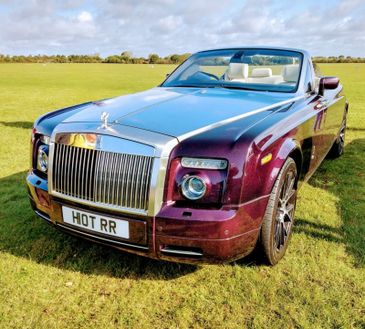
The first Rolls-Royce Phantom arrived in 1925 as the successor to the Silver Ghost. That name is again attributed to Claude Johnson and his early marketing team, and was, you could argue, a masterstroke of its time. A ‘phantom’ suggests presence without noise, power without aggression. It gave off an ai
Phantom: the name that wouldn’t die
The first Rolls-Royce Phantom arrived in 1925 as the successor to the Silver Ghost. That name is again attributed to Claude Johnson and his early marketing team, and was, you could argue, a masterstroke of its time. A ‘phantom’ suggests presence without noise, power without aggression. It gave off an air of aristocracy with just a whiff of the occult. Very British is that, remember the Hell Fire Club of old, to which our sister club bares its name. Typically associated with Francis Dashwood's Order of the Friars of St Francis of Wycombe, where rumour has it the club served as the meeting place for persons of quality who, shall we say, wished to take part in what were socially perceived as immoral acts, and the members were often involved in politics. Not much changes there then, when it comes to politics.
Over the years, the Phantom has become the cornerstone of the Rolls Royce brand – its flagship. It’s been through eight generations. Kings, dictators, rock stars and reclusive billionaires have all been chauffeured in Phantoms. During WWII, Phantoms were even modified for use by the RAF, and the British Royal Family made regular use of them. The name, like the car, has endured.

Wraith: a spiritual successor
The original Wraith came in 1938. It was a pre-war luxury car that combined elegance with cutting-edge (for the time) technology, such as independent front suspension. ‘Wraith’ means an apparition or ghostly image, perhaps darker than ‘Ghost’ and more mysterious than ‘Phantom’. Field Marshal Montgomery’s staff
Wraith: a spiritual successor
The original Wraith came in 1938. It was a pre-war luxury car that combined elegance with cutting-edge (for the time) technology, such as independent front suspension. ‘Wraith’ means an apparition or ghostly image, perhaps darker than ‘Ghost’ and more mysterious than ‘Phantom’. Field Marshal Montgomery’s staff car was a Wraith and was famously the first civilian vehicle to disembark in Normandy after D-Day, landing on Juno Beach. The Wraith name was used again in 2013 for a striking fastback coupé, designed to attract younger buyers. With a 624 bhp V12, it was the most powerful Rolls-Royce ever made. A Wraith with 624 horses may not nay loudly, but it sure does murmur with menace.
Who named it this time? By then, BMW had taken over Rolls-Royce, but the 21st century Goodwood-based design and branding team, led by Giles Taylor, (then director of design) and Torsten Müller-Ötvös (CEO), ensured the naming heritage remained steeped in British grandeur. They didn’t just resurrect an old name – they reimagined it for the modern era.
Shadows and spirits: the silent elegance of the mid-century box
When the Silver Shadow launched in 1965, it represented a seismic shift. Gone was the traditional body-on-frame construction. In came miniskirts, monocoque chassis, disc brakes, and advanced hydraulic self-levelling suspension from none other than a French Citroen. The name suited it perfectly. The Silver Shadow moved with such grace and silence, it didn’t as much as drive, it wafted.
Again, marketing came from within the Rolls-Royce PR and branding machine in Crewe, and names were chosen not by committee, but by those who understood the quiet authority of knowledge. Originally intended to be called Rolls-Royce Silver Mist, it was replaced with Silver Shadow at the last minute, due to mist meaning ‘manure’ in German.
The Silver Spirit followed in 1980, with a notably less spooky-sounding name than its predecessors, it reflected the more modern, globalised aspirations of Rolls-Royce in Thatcher’s yuppie era. It was still regal, in your face square like the shoulder pads of the day, with all the aerodynamics of a small 3 bedroom detached house. ‘Spirit’ has obvious links to ‘Spirit of Ecstasy’, the iconic radiator ornament sculpted by Charles Sykes in 1911. The word evokes motion, elegance and determination, perfect then for a car that was meant to glide, not gallop.
Camargue: straying from the formula
The Camargue then was something of an anomaly. Launched in 1975, it was the first post-war Rolls-Royce not named after something spectral. Designed by Paolo Martin at Pininfarina, it was a bold attempt to embrace continental style. The name comes from a wild region in southern France, famous for its unta
Camargue: straying from the formula
The Camargue then was something of an anomaly. Launched in 1975, it was the first post-war Rolls-Royce not named after something spectral. Designed by Paolo Martin at Pininfarina, it was a bold attempt to embrace continental style. The name comes from a wild region in southern France, famous for its untamed horses and flamingos. The intention was clear – luxury, freedom, European sophistication.
The result was rather mixed. While it carried the engineering pedigree of Crewe, its styling divided opinion. The name didn’t help either. It lacked the traditional otherworldly reverence of Ghost or Phantom. Camargue sounded like a Mediterranean cocktail rather than an aristocratic statement. But perhaps that was the point. Rolls-Royce was experimenting, seeing if its customers could be seduced by something slightly less, er British.
Silver Seraph: the celestial interlude
The Silver Seraph arrived in 1998 and was the first Rolls-Royce to use a BMW-sourced engine – a 5.4-litre V12 no less. The name ‘Seraph’ refers to the highest order of angels. It was elegant, rarefied, and appropriately divine. The model only lasted until 2002, as the BMW takeover led to a complete ov
Silver Seraph: the celestial interlude
The Silver Seraph arrived in 1998 and was the first Rolls-Royce to use a BMW-sourced engine – a 5.4-litre V12 no less. The name ‘Seraph’ refers to the highest order of angels. It was elegant, rarefied, and appropriately divine. The model only lasted until 2002, as the BMW takeover led to a complete overhaul of the brand and factory.
The Seraph was a beautiful car, understated, dignified, but it perhaps suffered from being caught between eras. Though still Crewe-built, but with German blood flowing through its veins, some say the Seraph was perhaps the last of the true Rolls-Royces, but I am not so sure with that BMW engine.

The modern era: Ghost, Dawn, Spectre
When BMW officially relaunched the brand in 2003, they knew names mattered. The Phantom VII was the first all-new Rolls-Royce under BMW ownership, and wisely they retained the naming lineage. In 2009, they resurrected the Ghost name, again, a nod to the 1906 legend. But this time it wasn’t just homage;
The modern era: Ghost, Dawn, Spectre
When BMW officially relaunched the brand in 2003, they knew names mattered. The Phantom VII was the first all-new Rolls-Royce under BMW ownership, and wisely they retained the naming lineage. In 2009, they resurrected the Ghost name, again, a nod to the 1906 legend. But this time it wasn’t just homage; it was a clear statement – Rolls-Royce could evolve without losing its soul.
In 2015 came the Dawn, the convertible sibling to the Wraith. The name, while less spooky, evoked new beginnings and unparalleled luxury. It was then an open-top Rolls-Royce for the great and the good – elegant, photogenic, a statement.
Then came Spectre.
Not 007’s arch adversary, but a leap into the Green camp. The Spectre marks a turning point. Unveiled in 2023, it’s Rolls-Royce’s first fully electric vehicle. With a range of over 300 miles and instant torque, it represents the future of truly silent, effortless driving. Maybe now you really can hear the ticking of th
Then came Spectre.
Not 007’s arch adversary, but a leap into the Green camp. The Spectre marks a turning point. Unveiled in 2023, it’s Rolls-Royce’s first fully electric vehicle. With a range of over 300 miles and instant torque, it represents the future of truly silent, effortless driving. Maybe now you really can hear the ticking of the clock over the road noise!
Why ‘Spectre’? Spectres are ethereal, powerful, and untraceable, just like the 007 baddy and so to this electric beast that moves without a murmur. CEO Torsten Müller-Ötvös personally endorsed the name, stating, “it needed to feel modern and ancient, forward-looking and timeless”.
They could have called it the EV1. But maybe that would’ve been too German.
20/25, 40/50 and the technical era
Before the naming went poetic, Rolls-Royce models were purely practical. The 20/25 (produced between 1929 and 1936) was a follow-up to the 20 HP, and referred to its horsepower ratings – 20 taxable and 25 actual. This was common in the early motor industry where names were more mechanical than magical.
But
20/25, 40/50 and the technical era
Before the naming went poetic, Rolls-Royce models were purely practical. The 20/25 (produced between 1929 and 1936) was a follow-up to the 20 HP, and referred to its horsepower ratings – 20 taxable and 25 actual. This was common in the early motor industry where names were more mechanical than magical.
But even then, Rolls-Royce stood out. Other manufacturers may have slapped on names like ‘Type B’ or ‘Model T’. But when Rolls-Royce decided to name a car the Silver Ghost, it changed everything. The motorcar became a character, not just a machine.
Why Rolls-Royce names still matter
Rolls-Royce names still matter quite simply because they mean something. They tell stories. They have continuity. While the rest of the car world changed their names to fit SEO algorithms, Rolls-Royce stuck to its ghosts and phantoms and it worked propelling Rolls-Royce’s sales figures to the best they’ve
Why Rolls-Royce names still matter
Rolls-Royce names still matter quite simply because they mean something. They tell stories. They have continuity. While the rest of the car world changed their names to fit SEO algorithms, Rolls-Royce stuck to its ghosts and phantoms and it worked propelling Rolls-Royce’s sales figures to the best they’ve been since 1978.
Each name is chosen carefully, often debated over months within the walls of Goodwood. The goal? To ensure that the car doesn’t just perform, it resonates with the discerning buyer. The names are about lineage, aura, and an uncanny sense of permanence.
Which is why, all these years later, I still have the Silver Shadow on my wall and the Sliver Spirit on my drive. Not because they were the fastest or the flashiest, but because they bring a sense of order to an ever changing world.

A visit to the Le Mans Classic Centenary Event
by Alan Parkes
This article is about a once in a lifetime opportunity to go to the Le Mans Classic Centenary Event in 2023. However, it is a recurring event which takes place every two years, the next date being early July 2025.
Once in a lifetime opportunities sometimes start in somewhat unlikely ways, and so it was one morning on a skiing holiday, in a lovely hotel in Ortisei in the Italian Dolomites, that one of our good friends, Rob, came down to breakfast and asked me if I might be interested in being his navigator, for going to the Le Mans Classic. I thought about this for possibly no more than a few milliseconds, and the rest, as the saying goes, is history.
Rob, who is a keen enthusiast for UK and European driving tours, had booked a couple of places on a driving tour to the Le Mans Classic and back with a small family-run company called Fantastic Roads, who specialise in organising road tours, often with a motorsport connection, in various countries in western Europe. Rob’s wife, Mary, very kindly suggested that maybe Rob might want to ask me to go with him to the event, knowing what a big enthusiast I am for classic cars.
Above is a photo of the main entrance gate to the Le Mans circuit, known locally by the way as the ‘Circuit de la Sarthe’.
One of the most memorable moments at this event, for me, was watching the line-up and start of 71 pre-war racing Bentleys, organised by the Benjafields Racing Club. In the photo above, you can see some of the drivers starting to line up in preparation for their sprint across the track for a traditional Le Mans start. Remarkably, the line-up included two of the original racing Bentleys which took part in the inaugural Le Mans 24 hours race, back in 1923. The number 8 car, which can be seen about 5-6 cars along from the right, is one of those inaugural race competition cars.
Our driving route to Le Mans took us far to the west of Paris, and we intentionally avoided the perennial bottle neck around Rouen, where many vehicles struggle to get across the Seine at certain times and also to avoid the city’s ULEZ zone. As we were travelling down to Le Mans in Rob’s fabulous, but somewhat thirsty, 5 litre V8 Jaguar F-Type, we thought it best if we avoided Rouen altogether! We had also been informed about how easy it is to stray into the ULEZ zone without being aware of it. Instead our westerly route took us across the Seine on the truly spectacular Pont du Normandie, which makes the Dartford Crossing bridge look somewhat dated by comparison.
We had set off from Buckinghamshire at about 7.00 am on Thursday 29 June. We took Le Shuttle across the Channel and arrived in Le Mans about 5.30 pm that evening. The journey in total, from Calais to Le Mans, took us about 5.5 hours, with a couple of short stops en route.

Whilst we were travelling, news came in from one of Rob’s car club friends about a couple of guys from a major UK-based Porsche dealership who had been apprehended by the French police, having been clocked doing 265 kph (about 160 mph) on one of the French motorways. They had both been arrested immediately, their Porsche cars impounded, and they would not make it to Le Mans at all that weekend.
So herein lies an important first lesson for anyone wanting to drive across France to get to Le Mans – there is seemingly nothing that the French police like doing more, than catching speeding motorists exceeding the speed limits on their way to Le Mans. Respect the speed limits and the French police and you should be fine.
Arrival at the Le Mans circuit by road is quite straightforward, and there are numerous car parks around the periphery, although car parking is naturally in high demand during major events and can be expensive. There is a metro tram service which runs approximately every 10 minutes from Le Mans city centre and bus services available too.
There is also an aerodrome very close to the northern periphery of the circuit for helicopters and small passenger aircraft, for those who are wealthy enough to want to get there in style!
Click here for a fairly high level map of the circuit with key areas clearly highlighted.
The entire (full length) circuit is comprised partially of both closed public roads and also some dedicated racing sections. The most famous straight on the circuit is the 6km-long Mulsanne Straight, which is normally a public road (the RD 338) when it’s not required for major racing events. The north-west side of the circuit, where the main grandstands are located, is actually on the far left of the map.
With Fantastic Roads, we stayed in a small family-run hotel located on the outskirts of the very picturesque town of La Fleche, approximately 25 km from the main entrance to the Circuit de la Sarthe. Our tour organiser laid on a minibus to take us to the circuit each morning and also to pick us up each evening. However, accommodation in the Le Mans area is in short supply when there is a major event taking place at the racing circuit, and often has to be booked many months or sometimes years in advance. Many visitors decide to use the camping sites, some of which are located at the circuit itself, with others off-site but fairly nearby.
The picture above is a photo looking down over the numerous paddock areas which can be visited with the purchase of the appropriate paddock pass. In the background are the main grandstands which nestle on both sides of the starting/finishing straight.
An expanded map of the north-west corner of the circuit can be found here. This is where the main entrance to the circuit is located and immediately below it on the map, the main grandstands and paddocks are located. There are also numerous shopping stands, car club areas, vehicle display stands, food outlets, and various other interesting attractions including the Porsche Experience Centre, a must visit experience for all Porsche owners/fans.
The 2023 centenary event was held over a four day period, starting with the opening of the course on the afternoon of Thursday 29 June, and finishing with the closure of the course at 5pm on Sunday 2 July. It appears that the 2025 programme will be held broadly over the same timescales. In general, each of the heats and qualifying rounds consisted of a 45 minute race for each of the six time-banded vehicle classes, also referred to as ‘The Grids’.
The Grids
To enable both the cars and drivers to compete in fairly equally matched races, the cars competing at the event are divided into six time-banded categories, which pertain to a particular era, Grid 1: 1923-1939, Grid 2: 1949-1956, Grid 3: 1957-1961, Grid 4: 1962-1965, Grid 5: 1966-1971 and lastly Grid 6: 1972-1981. In order to qualify to compete in the event, each car must meet a key criterion, being that they are a model/type of car which has taken part in the Le Mans 24 Hours some time between 1923 and 1981. Priority for entry is normally given to cars which have actually competed at the Le Mans 24 hour race at some time in the past. For cars in Grids 1-4 a traditional Le Mans start is used. Cars in Grids 5-6 use a flying start, presumably due to safely reasons.
Below are some example photos of cars relevant to each of the time banded Grids. Picture 1 - Grid 1: 1923-1939, Picture 2 - Grid 2 : 1949-1956, Picture 3 - Grid 3: 1957-1961, Picture 4 - Grid 4: 1962-1965, Picture 5 - Grid 5: 1966-1971, Picture 6 - Grid 6: 1972-1981.


.jpg/:/cr=t:0%25,l:0%25,w:100%25,h:100%25/rs=w:370,cg:true)


A gleaming icon: The 2002 Jaguar XJ8 polished aluminium saloon
A gleaming icon: The 2002 Jaguar XJ8 polished aluminium saloon
A gleaming icon: The 2002 Jaguar XJ8 polished aluminium saloon
by Lee Jones
During our recent Haddenham Classics trip to the British Motor Museum in Gaydon, I found myself strangely drawn to a car that seemed to defy the very concept of ageing. There it stood, resplendent under the museum lights, its mirror-like finish reflecting not just the room around it, but also the essence of British automotive ingenuity and what might have been. The 2002 XJ8 Polished Aluminium Jag. Not just a car, but a statement, a piece of art even.
But beyond its shimmering surface lies a story that spiked my interest and led to this article. It’s a story of not only innovation and ambition, but of a bold step into the future of automotive design. Let’s take a closer look at this gleaming Jag and explore why it remains such a standout piece in Jaguar’s history.
The shiny car’s debut: a car ahead of its time
Cast your mind back to the early 2000s, a fascinating period for the automotive industry. Manufacturers were grappling with the challenge of blending tradition with modernity, and Jaguar was no exception, often being surpassed by its German and Japanese rivals. Enter then the X350 series, the seventh generation of the now ageing XJ lineage, which debuted in 2002. This then was Jaguar’s answer to a rapidly evolving market, and was a bold one at that.
The X350 series marked a significant departure from its predecessors. This was thanks to its all-aluminium unitary construction bodyshell. Yes, Audi did it first back in 1999 with its polished alloy A8, but let’s not go there. This wasn’t just a minor tweak, it was an ‘up yours’ revolutionary move that redefined what a proper luxury saloon should be. To showcase this innovation, Jaguar created two pre-production models with polished aluminium finishes –
one left-hand drive and one right-hand drive, pictured here.
The polished aluminium XJ8 made its debut at the 2002 Paris Motor Show, where it stole the spotlight. Let’s face it, journalists and enthusiasts alike could not help but be captivated by its mirror-like finish, which highlighted the car’s graceful lines and showcased Jaguar’s engineering prowess. It said, ‘the British have arrived’, and to reserve a seat at the top table.
Engineering excellence: lightweight, luxurious and legendary
The decision by Jaguar’s design team to use an all-aluminium construction wasn’t just about making the car look good (though I think we can all agree it certainly achieved that). It was a strategic move to enhance performance, efficiency and longevity of a now ageing land yacht.
Weight reduction
The use of aluminium made the car significantly lighter and this weight saving translated into tangible benefits. The XJ8’s acceleration was blisteringly quick, its fuel efficiency improved, and its handling was more agile for a barge. It was like swapping a heavy overcoat for a spandex leotard – everything just felt more responsive.
A gleaming icon: The 2002 Jaguar XJ8 polished aluminium saloon
A gleaming icon: The 2002 Jaguar XJ8 polished aluminium saloon
Handling
The car was lighter and more nimble because of its aluminium body, and that made it a joy to drive on winding roads. Its double-wishbone air suspension system also further enhanced its ride, offering a blend of comfort and control.
Corrosion resistance
Guess what, in the UK it rains, but the Jag’s now aluminium body was resistant to the tin worm that plagued its forbearers, consigning them to the scrapheap. This Jag laughed in the face of rain and salt, ensuring the car’s longevity. But let’s not mention electrolysis!
The X350 also featured a silky smooth six-speed automatic transmission and a taller structure that increased its interior space, but without compromising its elegant proportions. Here was a car then that combined cutting-edge technology with timeless design – a rare feat at that time when it was all aerodynamic jelly moulds.
So what was it like to drive?
Unfortunately, I have no experience of driving one. But my research suggests that driving a 2002 Jaguar XJ8 was an experience that engaged all the senses. Slide into the supple leather seat, grip the leather-trimmed and hand-stitched steering wheel, catch yourself in the rear view and you’d have been immediately struck by the sense of occasion. You had made it big and you were a somebody! The cabin was a sanctuary of British luxury, with its mirror-matched walnut burl wood trim and meticulous attention to detail, this was a gentleman’s club on wheels.
Turn the key, and that 4.2-litre V8 engine woke with a refined growl, simmering down to a purr of contentment. Not aggressive, but rather a confident murmur that hints at the power beneath the bonnet, not unlike my Rolls Royce Silver Spirit 2. Pull away, and the six-speed automatic transmission would shift seamlessly, delivering smooth, effortless progress that a captain of industry deserved.
On the motorway, the XJ8 was a consummate cruiser with the air suspension gliding over imperfections in the road. Yes, roads did not have bomb craters back in those days. The cabin eerily quiet, allowing you to enjoy your premium sound system in peace, cocooned from the other peasants on the road. But it was on winding roads that your XJ8 truly shined. Because of its lightweight aluminium body and well-tuned suspension, this baby was a surprisingly agile car for its size. It would have felt planted and composed, with just enough feedback through the steering wheel before all the modern gizmos were introduced, to keep you engaged.
A gleaming icon: The 2002 Jaguar XJ8 polished aluminium saloon
Now if you had a polished aluminium exterior like this one, you’d probably be pulling admiring glances from all, but likely as an industry exec, you’d have gone for a dark colour, to match your debonair image. But it’s the driving experience that would have left the lasting impression as you got to the office. The XJ8 was a car that rewarded its driver with a sense of connection and involvement, something that’s often missing in modern-day luxury saloons.
The polishing process: a labour of love
The mirror-like finish of the XJ8’s polished aluminium exterior is nothing short of breathtaking and no small feat. But that got me to thinking, how do you achieve this level of perfection? The process of polishing aluminium panels is incredibly labour-intensive, and would likely have taken hundreds of hours to complete.
Surface preparation
The aluminium panels would have had to be meticulously cleaned and smoothed to remove any imperfections, scratches, or oxidation. This would have involved a lot of sanding with progressively finer grades of sandpaper, a process that could take dozens of hours alone.
Polishing
Once the surface was as smooth as a baby’s bum, it would be polished using specialised compounds and buffing wheels. A step repeated multiple times to achieve the desired level of reflectivity. Each panel would have had to be treated individually, requiring a steady hand and a craftsman’s eye for detail. And you’d be well peeved if your mate Kev from the factory trimming department came in and lent on the car, while he told you what he did at the weekend.
Finishing touches
After polishing the surface, you’d need to treat it with protective coatings to prevent tarnishing and maintain its shine. This step is crucial, as bare aluminium can quickly lose its lustre if not properly cared for.
The result was a finish that looked like a gangster's ride! Highlighting the car’s graceful lines and showcasing Jaguar’s craftsmanship and at a time when money was tight, this was a testament to the brand’s commitment to excellence and its willingness to go that extra mile.
Pricing: then and now
When the X350 series was launched in April 2003, the XJ8 carried a price tag of approximately £51,500. That was a huge wedge back in the day, but adjusted for inflation, it is equivalent to around £85,000 in today’s money and just enough to pay your annual electric bill, for the EV parked on the drive. To put that into perspective, you could buy a top-of-the-range Jaguar F-PACE today for roughly the same amount.
Back in 2003 though, this pricing positioned the XJ8 competitively within the luxury barge segment. It was a land yacht that offered a blend of performance, luxury, and heritage that was hard to beat. Today, it’s a classic that represents incredible value for money, especially when you consider its unique place in automotive history.
Buying a used XJ8: what to look for
If you’re tempted to own a piece of Jaguar history, here’s my buyers’ guide.
Air suspension issues
Not surprisingly, the XJ8’s air suspension system is a common pain point. Air springs can leak, and the compressor can fail over time. Listen for unusual noises and check whether the car sits level when parked or sinks to its knees when it’s left overnight.
Electrical gremlins
Now I’ve had my fair share of these with my Roller, and Jaguars of this era are no different and known for their complex electrical systems. Issues with the infotainment system, window regulators, and central locking are not uncommon. A thorough inspection by a specialist is highly recommended, unless you want to give up a kidney.
Timing chain tensioners
The 4.2-litre V8 engine is generally robust, but its timing chain tensioners can wear out. Listen for a rattling noise on start up, which could indicate a problem, and then run for the hills!
Rust
While the aluminium body is resistant to rust, the steel sub-frames and suspension components are not. And so if you want to avoid buying a car more akin to a Swiss cheese, check these areas very carefully.
How much to pay
Top-tier, low-mileage, well-maintained examples, with a full service history fetch £15,000–£20,000. Mid-Range, solid cars that may require some minor work fetch £8,000–£12,000. A project car for the brave and budget-conscious would fetch £3,000–£5,000, but expect to pay double that and again, to bring it up to scratch.
Didn’t Audi get there first: the A8 silver car and German rival
While the Jaguar XJ8 was making waves with its polished aluminium finish, Audi had already brought the t-shirt three years earlier, with the Audi A8 ‘Silver Car’ that it unveiled at the 1999 Frankfurt Motor Show. This one-off concept was based on the first-generation A8 (D2) and showcased Audi’s aluminium space frame (ASF) technology. Like the XJ8, the A8 Silver Car featured a polished aluminium exterior, but it approached the concept with a more technical, precision-engineered ethos.
Key differences
Design: The A8’s angular, modern design contrasted with the XJ8’s timeless elegance.
Engineering: Audi’s ASF technology was more radical, using extruded and cast aluminium components for a lightweight, rigid structure.
Driving Dynamics: The A8’s quattro all-wheel-drive system gave it superior traction, while the XJ8 focused on a balanced, engaging ride, the A8 left it for dust.
Both cars were ground-breaking in their own way, but the XJ8’s charm was its character and set it apart as a true British icon.
Conclusion: a shining legacy
So was the 2002 Jaguar XJ8 Polished Aluminium Saloon more than just a car? Was it a symbol of a time when Jaguar dared to dream big? Well yes, it was, they don’t make them like this anymore judging by the new marketing. Here was a car that combined the cutting-edge with timeless design, that offered a driving experience that’s as engaging as it was luxurious.
Whether you’re a seasoned collector or a first-time classic car buyer, the XJ8 is a car that deserves your attention. Just be prepared to spend a shedload of time (and money) keeping it in tip-top condition. After all, as any British car enthusiast will tell you, the joy of ownership often lies in the tinkering.
So, if you’re ever at the British Motor Museum in Gaydon, take a moment to admire this gleaming icon as I did. It’s not just a car – it’s a piece of history, polished to perfection.

Holts Tyreweld review – a classic car enthusiast’s perspective
by Lee Jones
There’s nothing quite as deflating, literally and figuratively, as a slow puncture on a classic motor. And if, like me, you’re running some period tyres on less than perfect alloys, you’ll know the unique frustration of rim leaks. Not quite a puncture, not quite a blowout, just an insidious loss of air that leaves you topping up the pressure more often than you check the oil.
Enter Holts Tyreweld, a temporary tyre repair in a handy can that claims to get you back on the road without faffing about with jacks, wheel braces, or your roadside dignity. But does it actually work? I put it to the test.
What is Holts Tyreweld?
Holts Tyreweld is an aerosol-based emergency tyre sealant designed to reinflate and repair punctures, without requiring tools or tyre removal. Unlike the older-style tyre foams that leave a permanent, rubbery mess inside the tyre, this is a wash-out formula, meaning it doesn’t condemn your expensive rubber to an early grave. Once it’s done its job, the tyre can be properly repaired by a professional if required.
It works by injecting a latex-based sealant and compressed gas into the tyre, filling small punctures and re-seating minor bead leaks. Officially, it’s meant for punctures in the tread area rather than sidewalls or rim leaks, but in the spirit of all good classic car ownership, I decided to ignore the instructions and see what happened.
My experience using Tyreweld
My 1991 Rolls Royce Silver Spirit has tyres as soft and fluffy as a Marks and Spencer Victoria sponge. And as is often the case with ageing alloys, they’ve developed slow leaks around the rims, causing the front tyres to lose pressure over time. I’ve had the tyre boys look at them twice before and £30 later they were still leaking.
Rather than resort to tyre sealant beads or costly alloy refurbishing, I grabbed a of can of Holts Tyreweld (large size, for 16-inch+ wheels) and set to work in the pouring rain as you do. Officially, it’s one can per tyre, but being a bit of a cheapskate, I split a single can between both front tyres.

The result? It actually worked! The slow leaks have stopped, and the tyres have held pressure for weeks. No more morning rituals with the compressor. Impressive.
The catch – how not to wear Tyreweld
However, one minor gripe arose during application: if the tyre isn’t completely flat when you inject the sealant, it has a habit of blowing back down the inflation tube. The result? A fine coating of sticky white gunk all over your hands, shoes, and possibly a silhouette of you on the side of the car parked alongside!
I lost about a quarter of a can to the great tyre god of wastefulness, but even with only three-quarters of a can spread between both front tyres, it still did the job. That says a lot about the product’s effectiveness.
You also need to have a compressor handy in the boot if the tyre is already flat.
Verdict – a classic car toolbox essential?
Holts Tyreweld isn’t a miracle cure, and it won’t fix major punctures caused by potholes (don’t get me started there), sidewall damage, or properly warped rims. But if you’ve got a nagging slow leak and don’t fancy shelling out for a tyre shop visit just yet, it’s absolutely worth having in the boot.
Just make sure the tyre is properly flat before applying it, or wear gloves unless you fancy looking like a Starbucks cappuccino.
To drive or not to drive: The Great British winter classic car conundrum
by Lee Jones
Ah, the British winter. A time of festive cheer, questionable jumpers, and roads that resemble a third-world banana republic. For classic car enthusiasts, this season brings with it a dilemma as old as the Mk1 Ford Escort’s rotten arches: should you brave the salted roads and drive your pride and joy, or tuck it away in the garage (or under a cover) like a hibernating hedgehog? Let’s weigh up the pros and cons of both options, with a healthy dose of British humour and a nod to the practicality of owning a classic from the 1970s to the 1990s.
Let’s face it, your classic isn’t a museum piece (unless it’s a Capri with 12 miles on the clock, in which case, why do you even own it?). Cars from the 70s to the 90s were built to be driven, not to gather dust. Driving your classic through winter keeps the mechanicals happy, the battery charged, and the cobwebs at bay. Plus, there’s something oddly satisfying about cruising past modern cars in a vehicle that actually has character.
Okay, did someone say pass the salt? So salt is great on your chips but not on your classic. But if you’re diligent with your cleaning routine, you can minimise the damage. A thorough rinse underneath after a day splashing through the salty potholes will help keep the rust at bay.
Driving a classic in January is like turning up to a winter country ball in a kilt with nothing underneath – it’s ballsy, flipping cold, but earns you serious respect. Just imagine the look on your neighbour’s face as you fire up your MGB GT on a frosty morning while they’re de-icing their Nissan Juke.

But let’s not sugarcoat it. Even with the best cleaning routine, salt is a sneaky little blighter. It’ll find its way into every nook and cranny, and before you know it, your sills will be full of holes. If your classic is already a bit crusty, winter driving might accelerate its transformation into a pile of iron oxide.
And then there’s the issue of grip. Let’s be honest, finding winter tyres for a Citroen 2CV is like trying to find a sober person at a beer festival. Most classics weren’t designed with modern winter conditions in mind, so grip can be… questionable.
The Great British weather doesn’t help either. Rain, sleet, snow, and the occasional apocalyptic storm means your classic will spend more time looking like a muddy rally car than the gleaming beauty it is. And let’s not forget the joy of defrosting a windscreen at -5 degrees with no heated elements.
On the other hand, by keeping your classic tucked away in a garage or under a cover, you’re shielding it from the salt, grime, and general misery of British winter roads. Your car will emerge in spring with no rust and looking as fresh as Tom Cruise.
No need to worry about icy roads, frozen locks, or the existential dread of finding a pothole deeper than the Grand Canyon. Your classic can enjoy a well-deserved rest, while you sip tea and reminisce about summer drives when it did not require a second mortgage to fill up your car.
Let’s be real, classics from the 70s to the 90s aren’t getting any younger. By keeping yours off the road in winter, you’re preserving it for future generations (or at least until next year’s MOT).
But storing your classic for months on end can lead to neglect. Batteries go flat, tyres develop flat spots, and mice might decide your wiring loom is the perfect place to raise a family.
There’s nothing quite as frustrating as staring longingly at your classic while it sits idle. You’ll find yourself dreaming of the open road, only to remember it’s currently covered in slush and despair.
And if you’re lucky enough to have a garage, it’s probably already full of car parts, tools, and that lawnmower you haven’t used since 2003. Storing your classic inside might require a Tetris-level reorganisation.
So, what’s the answer? Well, it depends on your classic, your tolerance for rust, not to mention your willingness to brave the elements, and oh that line of credit you took out with the Bank of England. If your car is a solid, well-maintained example and you’re committed to regular cleaning, driving it through winter can be a rewarding experience. However, if your classic is prone to rust, it’s probably best to tuck it away until spring.
Ultimately, the decision comes down to this: do you want to be the person who drives their classic year-round, salt be damned, or the one who preserves it like a fine wine, only to be enjoyed on special occasions? Either way, just remember to keep the kettle on standby – you’ll need it after a long day of winter motoring (or garage reorganising).
Happy driving (or storing)!